Uncategorized

Canada and the Migrant Caravan on the US Border

Background on Social Solidarity Economy

Globalization has paved the way for an historic deterioration of national sovereignty slowly being replaced by one-world governance with Marxist ideologies. The rise of the “Social and Solidarity Economy” movement has taken root and flourished. What started off in the 19th century as a labour movement had resurfaced in France in 1968 with the reshuffling of the relationship between the State, corporations, and civil society (1)(2). Social Solidarity Economy originated in France in the late 90s by an association called “Réseau des l’économie alternative et solidaire (REAS)” that advocated for the restructuring of economic alternatives. REAS members included people involved in Green party politics and disillusioned communists or socialists throughout France (3).

By 1995, Social Solidarity Economy gained acceptance in Quebec after an appeal for a solidarity economy was published in Le Monde, a large newspaper in France (3). In 1996, the Quebec government decided to reduce the budget deficit to zero, at a time of high unemployment. Quebec was predominantly a welfare state, and one of the reasons for the deficit was the interest on public debt, which was higher per capita than in any other Canadian province.

Premier Lucien Bouchard, of the Parti Québécois, called a Socioeconomic Summit and for the first time in history, social and community organizations along with government, corporations, and unions met as partners to adopt the Social Solidarity Economy as a priority for job creation and to reduce poverty (3). The unions agreed to freeze wages while the government and private corporate sector agreed that the social economy would be supported by both federal and provincial government policies. To coordinate the implementation of the program, the government created the “Chantier de l’économie sociale du Québec”, a non-profit corporation whose mandate was to promote the social economy in Quebec (3).

So where exactly will Quebec get the money required for these programs? The Social Solidarity Economy refers to the third sector of our economy, the relationship that exists between corporations and foundations, non-profits, NGOs, charities, cooperatives, and organized labour. This sector operates at a loss and relies heavily on government subsidies, grants and tax credits (4). These programs cost billions of dollars each year to implement (25% of our budget) and produce very insignificant returns.

In 1996, the Liberal government under the leadership of Jean Chrétien approved these programs (Figure 1). So, Quebec was allowed to reduce its deficit to zero and employ thousands in this “false economy”, all on the backs of the Canadian taxpayer. The Social and Solidarity Economy is indeed a true Marxist utopia where citizens share in the wealth of the nation, while our globalist puppet masters control the workings of the government, activists groups, labour groups and the very citizens that they employ. Welcome to Canada comrade!

Soros, Tides Canada and the Social Economy

Several organizations within the Social and Solidarity Economy are engaged in political and social crusades whereby corporations use their foundations as “activism portals” to influence public opinion and government policy (4). George Soros, billionaire founder of the Open Society Foundation and donor to Tides Foundation, considers this new network of foundations as a “cross between a foundation and a movement” that can directly benefit the agenda of a small but powerful group of wealthy globalists determined on steering the sociopolitical framework of nations in their favour (5). Here are just a few examples of this corruption:

  • Tides Foundation was behind the push to restore voting rights for felons in Virginia in order to influence the US elections in 2016 (6)
  • US Foundations (Tides) campaign to kill the Albertan Oil Sands (7)
  • Soros’ Tides Foundation Canada under investigation by the Canada Revenue Agency (CRA) for election interference (8)
  • Non-Profit of terrorist bomber received Tides Foundation funding (9)
  • Soros’ Open Society sponsored immigration network exposed in Italy (10)

Between 2002 through to 2007, the Social Solidarity Economy movement had spread to other parts of Canada and into the United States. The Canadian Community Economic Development Network (CCEDNet), that formed in Quebec in 1999, consisted of community-based organizations, co-operatives, social enterprises, researchers and active citizens, promoted the nation-wide implementation of the social economy and was instrumental in launching the Intercontinental Network for the Promotion of the Social Solidarity Economy (RIPESS) (11). The North American Chapter consisted of three working agencies that advocated for the social economy: Chantier de l’economie Sociale (Quebec), CCEDNet (Quebec) and the United States Solidarity Economy Network (US SEN) (12).

Today, the globalization of the Social Solidarity Economy includes six international chapters of RIPESS: Africa & the Middle East, Latin America, North America, Asia, Europe, and Oceana. Yvon Poirier from CCEDNet (Quebec) is president of RIPESS (13) (14). RIPESS works closely with the United Nations (13) and international labour organizations, all supporting left-leaning agendas. Quebec, Quebec politicians, and their globalist counterparts therefore played an integral role in what has materialized today as United Nations Agenda 2030.

In 2004, Prime Minister Paul Martin included a social economy initiative in the federal budget to fund these programs under the Social Sciences and Humanities Research Council (SSHRC) umbrella (15). In the fall of 2005, prior to the election, it was feared that the change in government would eliminate these programs along with contracts so there was a haste to speed up the process and sign these deals.

After the Liberals lost the elections, the new Conservative government led by Stephen Harper abolished these programs in September 2006, leaving only the research portion, a five year plan, in place (4). When the Harper conservatives took office, the SSHRC, under the direction of the Deputy Director Johanne Mennie and current People’s Party of Canada (PPC) Campaign Coordinator, warned social economy groups and academic researchers “to frame their productions as research not advocacy activities” (Figure 2) in order to obtain funding (16).

On October 19-20 2006, Ms. Mennie attended a private meeting sponsored by Tides Canada Foundation (Figures 3 & 4). The meeting was called Scaling up the Canadian Social Finance Sector: Strategy Session”, the very same programs Stephen Harper’s government de-funded just a month earlier. At this meeting the following recommendations were made (4) (17):

  • It was agreed by all the attendees that social economy initiatives would continue under the leadership of Tides Canada Foundation
  • It was agreed that these programs would require the development of a national institution that would act as a Social Investment Bank (similar to Trudeau’s Infrastructure Bank)
  • Attendees agreed that they would get involved in political lobbying in order to “seed” a social finance agenda
  • It was agreed that attendees would position these programs as an “investment opportunities” rather than “government grants and incentives” programs (to overlook the fact that these programs were operating at a loss and depended almost entirely on government grants and tax credits)
  • It was agreed that there was a critical need to develop a public policy agenda

Note: The minutes from this meeting do not indicate that there was any opposition on record to these initiatives by Ms. Mennie, who was the Deputy Minister of HRSDC/SSHRC. Prime Minister Stephen Harper was clear in voicing his opposition to these programs. Prior to the election, he cut the funding and put restrictions on what the foundations could and could not do (4). So what then is a government official doing at this meeting? Was there usurpation in Harper’s government? And who exactly were the attendees present at this meeting? Tim Draimin founding CEO of Tides Canada Foundation (18), David LePage of CCEDNet (19), Nancy Neamtan President of Chantier de l’economie Sociale (20), andTim Brodhead CEO J.W. McConnell Foundation (current mentor and previous Director of the Trudeau Foundation), to name a few (21).

By 2010, in spite of the federal cuts to these programs, these same individuals set up the Canadian Task Force on Social Finance. This time one of their founding members included the Rt. Hon. Prime Minister Paul Martin of the Liberal Party of Canada (Figure 5) (22), and their funding partner was the Ontario Liberals led by Dalton McGuinty. One might call this a conspiracy theory but, is it a conspiracy theory if the events and the planning actually took place?

Who exactly is Johanne Mennie? For a person who has been in government since the Chretien Liberals she doesn’t have a huge internet presence. We know Ms. Mennie was Deputy Director of the Social Sciences Humanities Research Council (SSHRC) & Human Resources and Skills Development Canada (HRSDC), Director of the Heritage Foundation, and worked for the Policy Research Initiative which was created by the Privy Council to broaden the research community of the SSHRC (Figure 8).

Johanne Mennie is also the Deputy Director responsible for policy development in government, and when one is sitting at a corporate board meeting and pressuring for policy this goes way past employee. The connections are here; the very same corporations pushing the social economy agenda got the Deputy Director responsible for policy development in government to do their bidding (23)!

One month later, on November 21st 2006, the same group of attendees from the Tides Canada meeting were called as witnesses by a House of Commons committee meeting investigating the value of the social economy in Canada. This is the statement of Ms. Carol Hunter executive director of the Canadian Cooperative Association (CCA) promoting “Johanne Mennie’s shop” (24):

Johanne Mennie was also listed as Director of Canada Inc. (Figure 7), which has over 8,000 employees and a budget of 2.4 million, which she launched between January-March of 2018 (coincidentally at the same time Maxime Bernier officially launched the PPC) through the acquisition of an office from the Canadian Security Intelligence Services (CSIS). Canada Inc. manages 12, 802 Government companies, 175,961 Charitable Organizations and Foundations, and an additional 548,848 Organization Companies (25). Is this the Social Economy Hybrid Universe: the relationship that exists between Government, Corporations, and Foundation & Charities (4) ? Is “Johanne Mennie’s shop” the home office for the social economy? Or is it the home office for a one-world government? Apparently, Canada may very well have a deep state after all!

Canada’s Connection to the Caravan

The Chicago group involved in the Caravan movement at the Mexican border was led by Inneo Mujica of the Pueblo Sin Fronteras (People Without Borders), a Chicago-based non-profit organization that follows a Marxist-Leninist ideology and believes in a world without borders. They are committed to trade union work and other international missions (26) (27)(28). Since 2010 they have been organizing caravans of migrants to illegally cross into Mexico and the United States, including the Caravan of 2018. Pueblo Sin Fronteras was created alongside other radical Mexican-American activists groups in order to establish a migrant pipeline across the US-Mexican border (26). They are members of the National Day Laborer Organizing Network (NDLON), a left-wing coalition for immigrant activists group (26)(28)(40).

Other coalition members of NDLON include CASA de Maryland and Centro Legal de la Raza (37)(38).

Tax returns filed by Tides Foundation for 2017 (36) show funding to CASA de Maryland Inc. Joel Garcia, second director of Centro Legal de la Raza and founder of Clinica de la Raza Inc. (39) received funding by Tides Foundation funding for Clinica de la Raza Inc. (36).

NDLON has a partnership and is funded by American Federation of Labour-Congress of Industrial Organization (AFL-CIO). (29) (30). The AFL-ICO is the largest federation of labour unions and is actively involved with the Social Solidarity Economy (31)(32)(33). The AFL-CIO was part of the national planning committee that helped to develop the US Social Forum (USSF), consisting of big labour groups and social activists groups. It was used to create the United States Solidarity Economy Network (US-SEN), part of the North American Chapter of RIPESS (34), which was founded by Quebec.

Both AFL-CIO and RIPESS are listed members of Union for Radical and Political Economies (URPE) (35). Members from this organization promote the Social Solidarity Economy and are left political economists who advocate for Marxism. Many of these organizations actively campaigned for left-leaning politicians such as Barack Obama and Hillary Clinton.

Other Groups that Received Funding from Tides Foundation Include:

  • American Friends of Service Committee:

America Friends of Service Committee is a Quaker organization that helped fund raise for Pueblo Sin Fronteras (28). They received direct funding from Tides Foundation (36).

  • The Immigration Justice Campaign:

The Immigration Justice Campaign (coalition members of American Friends of Service) promoted pro bono legal representation for persons detained by US immigration authorities (42). Immigration Justice Campaign is administered by Center for Popular Democracy (43), which merged with Center for Community Change (44) and was also funded by Tides Foundation (36).

  • BAMN: By Any Means Necessary

The communist group By Any Means Necessary (BAMN) voiced its support for the caravan and published a manifesto accusing the Trump administration of being “lawless and repressive.” BAMN wrote: “Open it up or we’ll shut it down! Everyone must be let in! MEXICANS and AMERICANS stand with us!” (28)

BAMN is a Revolutionary Workers League. United for Equality and Affirmative Action League Defense Fund (UEAALDF) coordinated BAMN’s legal defense and is the tax-exempt affiliate of BAMN. Both organizations share the same two leaders and both are identified as national coordinators. UEAALDF received funding support from Southern Poverty Law Center, which is directly funded by Tides Foundation(36). BAMN also has ties to NABLA (North American Man/Big Boy Love) and Revolution Workers League (RWL) (41).

The Tides Foundation is structured like a money-laundering operation. Funders who wish to remain anonymous can make contributions through Tides, which avoids the tax-based requirement to report its own donors by structuring itself as an organization with broad-based support (45). On the first page of their 2017 tax returns (Figure 6) is written:

Tides Foundation primary exempt purpose is grant making. We empower individuals and institutions to move money efficiently and effectively towards positive social change”

For those of you that have been confused with the alphabet soup, all of these movements have emerged from the same groups that were designed in Quebec to promote the Social Solidarity Economy. So, that Tides Canada Foundation meeting that took place on October 19-20 2006, which involved all the principle stakeholders of this movement, was not as innocent as many would like us to believe (4). Historians refer to this as the “Not-So-Quiet Revolution.”(46)

The RIPESS network, consisting of Chantier de l’economie and CCEDNet with headquarters in Quebec, advocates for open borders. On February 4, 2019, the European Chapter of RIPESS released a guide for campaigners, communicators and activists called “How to talk about the societies we want in Europe” (47) (48). (Figure 9)This guide advocates for open borders and makes recommendations on how to phrase the narrative on open borders so as not to upset Europeans:

We recommend using this imagery of the shared and continuous land and waterways of Europe, but without explicitly mentioning borders… emphasize that borders are invisible.”

Friends of the Earth and the Europeans Woman’s Lobby financed this RIPESS guide and also received funding from Tides Foundation (36 ). In addition Nancy Neamtan (President of Chantier de l’economie sociale) and David LePage (CCEDNet) , both organizations within RIPESS were also present at that October 2006 Tides Canada Foundation meeting(17). It appears therefore, that Ms. Johanne Mennie’s (Executive Campaign Coordinator of Maxime Bernier’s PPC) attendance at a Tides Foundation meeting was not so innocent at all; it was a meeting of the “Collaborators of Mass Migration”.

So Canada has a very serious problem and it’s called Quebec. Regardless if the UN Global Compact on Migration is ratified or not, under the “Canada-Quebec Accord”, Quebec regulates its own immigration separate from the Federal Government and essentially has a back door into Canada (49). So for those of you concerned about mass migrations, the true question is not who is in power in Ottawa, but rather who is in power in Quebec?

Make no mistake, the Social and Solidarity Economy is a Global Communist Movement where foundations are acting as conduits for money transfers to support their cause. These are movements are fueled by the corporate elites along with larger labour unions and social advocacy groups collectively promoting the social economy while advocating for social justice, but whose ultimate intention is to control of the people.

To our American friends and neighbours, Canada’s role, or rather Quebec’s role in the destabilization of the North American Continent goes beyond a mere “sorry”. Western civilization and the preservation of our society is truly dependent on the actions of one person and to him we say, “Mr. President, build that wall!”

References:

  1. https://journals.openedition.org/interventionseconomiques/2711
  2. https://www.academia.edu/12417203/Marxism_and_the_solidarity_economy
  3. https://ccednet-rcdec.ca/sites/ccednet-rcdec.ca/files/another_economy-poirier_kawano.pdf
  4. https://shawnpaulmelville.com/2019/02/18/soros-tides-foundation-and-the-ppc/
  5. https://www.ssc.wisc.edu/~wright/Social%20Economy%20PDFs/Quebec%20Social%20Economy/Mendell%202009.pdf
  6. https://www.washingtontimes.com/news/2013/jun/24/tides-foundation-behind-push-restore-felon-voting-/
  7. https://calgaryherald.com/news/local-news/corbella-vivian-krause-should-become-a-household-name-across-canada
  8. https://www.breitbart.com/national-security/2012/05/08/soros-tides-foundation-canada/
  9. https://capitalresearch.org/article/nonprofit-of-terrorist-bomber-received-tides-foundation-funding/
  10. https://www.zerohedge.com/news/2017-07-16/soros-sponsored-immigration-network-exposed-italy
  11. https://ccednet-rcdec.ca/en/new-in-ced/2018/11/22/government-canada-invests-805m-social-finance
  12. http://www.ripess.org/continental-networks/north-america/?lang=en
  13. http://www.ripess.org/who-are-we/our-allies/?lang=en
  14. https://www.linkedin.com/in/yvon-poirier-62395916/
  15. http://publications.gc.ca/collections/collection_2015/rhdcc-hrsdc/HS1-17-2004-eng.pdf
  16. http://www2.unb.ca/~luct/pdf/Social%20Economy%20and%20the%20Conservative%20Government%20%28H%29.pdf
  17. https://corostrandberg.com/wp-content/uploads/2006/12/scaling-up-the-canadian-social-finance-sector.pdf
  18. https://www.linkedin.com/in/timdraimin/?originalSubdomain=ca
  19. https://ccednet-rcdec.ca/en/new-in-ced/2017/06/15/ccednet-members-named-federal-social-innovation-and
  20. https://www.broadbentinstitute.ca/nancyneamtan
  21. http://www.fondationtrudeau.ca/en/community/tim-brodhead
  22. https://www.marsdd.com/wp-content/uploads/2011/02/MaRSReport-socialfinance-taskforce.pdf
  23. https://www.linguee.fr/anglais-francais/traduction/deputy+for+policy+i.html
  24. http://www.ourcommons.ca/DocumentViewer/en/39-1/HUMA/meeting-39/notice
  25. https://shawnpaulmelville.com/2019/03/01/johanne-mennie-deep-mysteries-deep-state/
  26. https://www.influencewatch.org/non-profit/pueblo-sin-fronteras/
  27. https://capitalresearch.org/article/the-open-border-activists-behind-the-illegal-immigrant-caravans/
  28. https://capitalresearch.org/article/how-the-left-changed-its-narrative-on-the-migrant-caravans/
  29. https://www.influencewatch.org/non-profit/national-day-laborer-organizing-network/
  30. https://www.revolvy.com/page/National-Day-Laborer-Organizing-Network
  31. https://www.influencewatch.org/labor-union/afl-cio/
  32. http://www.geo.coop/node/468https://www.resilience.org/stories/2016-09-14/can-the-new-economy-and-labor-movements-come-together-again/
  33. https://socialistproject.ca/2010/07/b392/
  34. https://ussen.org/portfolio/another-economy-is-possible-using-ussf-to-create-ussen/
  35. https://urpe.org/?page=resources&side=links&sub=radical_and_progressive_political_economy_and_activist_organizations
  36. https://www.tides.org/wp-content/uploads/2018/11/2017_Tides_Foundation_Form_990.pdf
  37. https://en.wikipedia.org/wiki/CASA_de_Maryland
  38. https://en.wikipedia.org/wiki/National_Day_Laborer_Organizing_Network
  39. https://www.eastbaytimes.com/2009/04/29/latino-legal-center-marks-40-year-anniversary/
  40. https://www.influencewatch.org/non-profit/national-day-laborer-organizing-network/
  41. https://www.influencewatch.org/organization/by-any-means-necessary-bamn/
  42. https://www.the-people-united.org/organization/immigration-justice-campaign/
  43. https://www.helpwanted.com/6ea567fb7ebf4-Immigration-Justice-Campaign-Director-job-listings
  44. https://populardemocracy.org/key-allies-celebrate-our-merger
  45. https://sorosfiles.com/soros/2011/10/the-tides-foundation.html
  46. https://ccednet-rcdec.ca/sites/ccednet-rcdec.ca/files/mw150113.pdf
  47. http://www.foeeurope.org/sites/default/files/other/2019/how-to-talk-about-the-societies-we-want-in-europe.pdf
  48. http://www.ripess.eu/how-to-talk-about-the-societies-we-want-in-europe-new-guide/
  49. https://www.thecanadianencyclopedia.ca/en/article/politique-du-quebec-immigration
Figure 1: PM Jean Chretien announced federal investment for Quebec “Social Economy”.
Figure 2: SSHRC warns frontline social economy organizations and academics to frame their work as “research” and not “advocacy”.
Figure 3: Tides Canada Foundation meeting October 19-20, 2006
Figure 4: Tides Canada Foundation meeting October 19-20, 2006.
Figure 5: The Canadian Task Force on Social Finance established 2010.
Figure 6: Tides Foundation Tax Returns 2017
Figure 7: Johanne Mennie listed as Director of Canada Inc.
Figure 8: Policy Research Initiative created in 1996 under the Jean Chretien Liberals by the clerk of the Privy council to expand the research partnership of the Social Sciences and Humanities Research Council (SSHRC).
Figure 9: Taken from the RIPESS-Friends of the Earth implementation guide “How we want to talk about the societies we want in Europe”
Global Migration

Soros and the Canadian Connection to the Migrant Caravan on the US Border

Background on Social Solidarity Economy

Globalization has paved the way for an historic deterioration of national sovereignty slowly being replaced by one world governance with Marxist ideologies. The rise of the “Social and Solidarity Economy” movement has taken root and flourished. What started off in the 19th century as a labour movement had resurfaced in France in 1968 with the reshuffling of the relationship between the State, corporations, and civil society (1)(2). The phrase “Social Solidarity Economy” originated in France in the late 90s by an association called Réseau des l’économie alternative et solidaire (REAS) that advocated for the restructuring of economic alternatives. REAS members included people involved in Green party politics and disillusioned communists or socialists throughout France (3).

By 1995, the expression “Social Solidarity Economy” gained acceptance in Quebec after an appeal for a solidarity economy was published in Le Monde, a large newspaper in France (3). In 1996, the Quebec government decided to reduce the budget deficit to zero at a time of high unemployment. Quebec was predominantly a welfare state, and one of the reasons for the deficit was the interest on public debt, which was higher per capita than in any other Canadian province.

Premier Lucien Bouchard, of the Parti Québécois, called a Socioeconomic Summit and for the first time in history, social and community organizations along with government, corporations, and unions met as partners to adopt the Social Solidarity Economy as a priority for job creation and to reduce poverty (3). The unions agreed to freeze wages while the government and private corporate sector agreed that the social economy would be supported by both federal and provincial government policies. To coordinate the implementation of the program, the government created the “Chantier de l’économie sociale du Québec, a non-profit corporation whose mandate was to promote the social economy in Quebec (3).

So where exactly will Quebec get the money required for these programs? The Social Solidarity Economy refers to the third sector of our economy, the relationship that exists between corporations and foundations, non-profits, NGOs, charities, cooperatives, and organized labour. This sector operates at a loss and relies heavily on government subsidies, grants and tax credits (4). These programs cost billions of dollars each year to implement (25% of our budget) and produce very insignificant returns.

In 1996, the Liberal government under the leadership of Jean Chrétien approved these programs (Figure 1). So basically, Quebec was allowed to reduce its deficit to zero and employ thousands in this “false economy” all on the backs of the Canadian taxpayer. The Social and Solidarity Economy is indeed a true Marxist utopia where citizens share in the wealth of the nation, while our globalist puppet masters control the workings of the government, activists groups, labour groups and the very citizens they employ. Welcome to Canada comrade!

Soros, Tides Canada and the Social Economy

Several organizations within the Social and Solidarity Economy are engaged in political and social crusades where corporations use their foundations as “activism portals” to influence public opinion and government policy (4). George Soros, billionaire founder of the Open Society Foundation and donor to Tides Foundation, considers this new network of foundations as a “cross between a foundation and a movement” that can directly benefit the agenda of a small but powerful group of wealthy globalists determined on steering the sociopolitical framework of nations in their favour (5). Here are just a few examples of this corruption:

  • Tides Foundation was behind the push to restore voting rights for felons in Virginia in order to influence the US elections in 2016(6)
  • US Foundations (Tides) campaign to kill the Albertan Oil Sands (7)
  • Soros’ Tides Foundation Canada under investigation by the Canada Revenue Agency (CRA) for election interference (8)
  • Non-Profit of terrorist bomber received Tides Foundation funding (9)
  • Soros’ Open Society sponsored immigration network exposed in Italy (10)

Between 2002 and 2007, the Social Solidarity Economy movement had spread to other parts of Canada and into the United States. The Canadian Community Economic Development Network (CCEDNet) that formed in Quebec in 1999, consisted of community-based organizations, co-operatives, social enterprises, researchers and active citizens; it promoted the nation-wide implementation of the social economy and was instrumental in launching the Intercontinental Network for the Promotion of the Social Solidarity Economy (RIPESS) (11). The North American Chapter consisted of three working agencies who advocated for the social economy: Chantier de l’economie Sociale (Quebec), CCEDNet (Quebec) and the United States Solidarity Economy Network (US SEN) (12).

Today, the globalization of the Social Solidarity Economy includes six international chapters of RIPESS: Africa & the Middle East, Latin America, North America, Asia, Europe, and Oceana. Yvon Poirier from CCEDNet (Quebec) is president of RIPESS (13) (14). RIPESS works closely with the United Nations (13) and International Labour Organizations all supporting left leaning agendas. Quebec, Quebec politicians, and their globalist counterparts therefore played an integral role in what has materialized today as United Nations Agenda 2030.

In 2004, Prime Minister Paul Martin included a social economy initiative in the federal budget to fund these programs under the Social Sciences and Humanities Research Council (SSHRC) umbrella (15). In the fall of 2005, prior to the election, it was feared that the change in government would eliminate these programs along with contracts so there was a haste to speed up the process and sign these deals.

After the Liberals lost the elections, the new Conservative government led by Stephen Harper abolished these programs in September 2006, leaving only the research portion, a five year plan, in place (4). When the Harper conservatives took office, the SSHRC, under the direction of the Deputy Director Johanne Mennie and current People’s Party of Canada (PPC) Campaign Coordinator, warned social economy groups and academic researchers “to frame their productions as research not advocacy activities” (Figure 2) in order to obtain funding (16).

On October 19-20 2006, Ms. Mennie attended a private meeting sponsored by Tides Canada Foundation (Figures 3 & 4). The meeting was called “Scaling up the Canadian Social Finance Sector: Strategy Session”, the very same programs Stephen Harper’s government defunded just a month earlier. At this meeting the following recommendations were made: (4) (17)

  • It was agreed by all the attendees that social economy initiatives would continue under the leadership of Tides Canada Foundation
  • It was agreed that these programs would require the development of a national institution that would act as a Social Investment Bank (similar to Trudeau’s Infrastructure Bank)
  • Attendees agreed that they would get involved in political lobbying in order to “seed” a social finance agenda
  • It was agreed that attendees would position these programs as an “investment opportunities” rather than “government grants and incentives” programs (to overlook the fact that these programs were operating at a loss and depended almost entirely on government grants and tax credits)
  • It was agreed that there was a critical need to develop a public policy agenda

Note: The minutes from this meeting do not indicate that there was any opposition on record to these initiatives by Ms. Mennie, who was the Deputy Minister of HRSDC/SSHRC. Prime Minister Stephen Harper was clear in voicing his opposition to these programs prior to the election, he cut the funding and put restrictions on what the Foundations could and could not do (4). So what then is a government official doing at this meeting? Was there usurpation in Harper’s government? And who exactly were the attendees present at this meeting? Tim Draimin founding CEO of Tides Canada Foundation (18), David LePage of CCEDNet (19), Nancy Neamtan President of Chantier de l’economie Sociale (20), Tim Brodhead CEO J.W. McConnell Foundation (current mentor and previous Director of the Trudeau Foundation)(21).

By 2010, in spite of the federal cuts to these programs these same individuals set up The Canadian Task Force on Social Finance. This time one of their founding members included the Rt. Hon. Prime Minister Paul Martin of the Liberal Party of Canada (Figure 5) (22), and their funding partner was the Ontario Liberals led by Dalton McGuinty. One might call this a conspiracy theory but, is it a conspiracy theory if the events and the planning actually took place?

Who exactly is Johanne Mennie? For a person who has been in government since the Chretien Liberals she doesn’t have a huge internet presence. We know Ms. Mennie was Deputy Director of the Social Sciences Humanities Research Council (SSHRC) & Human Resources and Skills Development Canada (HRSDC), Director of the Heritage Foundation, and worked for the Policy Research Initiative which was created by the Privy Council to broaden the research community of the SSHRC (Figure 8).

Johanne Mennie is also Deputy Director responsible for policy development in government, and when one is sitting at a corporate board meeting and pressuring for policy this goes way past employee. The connections are here; the very same corporations pushing the social economy agenda got Deputy Director responsible for policy development in government to do their bidding! (23)

One month later on November 21 2006, the same group of attendees from the Tides Canada meeting, were called as witnesses by a House of Commons committee meeting investigating the value of the “social economy” in Canada. This is the statement of Ms. Carol Hunter executive director of the Canadian Coperative Association (CCA) promoting “Johanne Mennie’s shop”: (24)

Johanne Mennie is also listed as Director of Canada Inc. (Figure 7) who has over 8,000 employees and a budget of 2.4 million which she launched between January-March of 2018 (just before Maxime Bernier officially launched the PPC) through the acquisition of an office from the Canadian Security Intelligence Services (CSIS). Canada Inc. manages 12, 802 Government companies, 175,961 Charitable Organizations and Foundations, and an additional 548,848 Organization Companies (25). Is this the “Social Economy” Hybrid Universe: the relationship that exists between Government, Corporations, and Foundation & Charities? (4) Is “Johanne Mennie’s shop” the home office for the social economy? Or is it the home office for a one world government? Apparently, Canada may very well have a deep state after all!

Canada’s Connection to the Caravan

The Chicago group involved in the Caravan movement at the Mexican border was led by Inneo Mujica of the Pueblo Sin Fronteras (People Without Borders), a Chicago-based non-profit organization that follows a Marxist-Leninist ideology and believes in a world without borders. They are committed to trade union work and other international missions (26) (27)(28). Since 2010 they have been organizing caravans of migrants to illegally cross into Mexico and the United States including the Caravan of 2018. Pueblo Sin Fronteras was created alongside other radical Mexican-American activists groups in order to establish a migrant pipeline across the US-Mexican border (26). They are members of the National Day Laborer Organizing Network (NDLON) a left-wing coalition for immigrant activists group (26)(28)(40).

Other coalition members of NDLON include CASA de Maryland and Centro Legal de la Raza (37)(38). Tax returns filed by Tides Foundation for 2017 (36) show funding to CASA de Maryland Inc. Joel Garcia, second director of Centro Legal de la Raza and founder of Clinica de la Raza Inc. (39) received funding by Tides Foundation funding for Clinica de la Raza Inc. (36).

NDLON has a partnership and is funded by AFL-CIO (American Federation of Labour-Congress of Industrial Organization) (29) (30). The AFL-ICO is the largest federation of labour unions and is actively involved with the Social Solidarity Economy (31)(32)(33). The AFL-CIO was part of the national planning committee that helped to develop the USSF (US Social Forum) consisting of big labour groups and social activists groups which was used to create the US-SEN, part of the North American Chapter of RIPESS (34) which was founded by Quebec.

Both AFL-CIO and RIPESS are listed members of Union for Radical and Political Economies (URPE) (35). Members from this organization promote the Social Solidarity Economy and are left political economists who advocate for Marxism. Many of these organizations actively campaigned for left-leaning politicians such as Barack Obama and Hillary Clinton.

Other Groups that Received Funding from Tides Foundation Include:

  • American Friends of Service Committee:

America Friends of Service Committee is a Quaker organization that helped fundraise for Pueblo Sin Fronteras (28). They received direct funding from Tides Foundation (36).

  • The Immigration Justice Campaign:

The Immigration Justice Campaign (coalition members of American Friends of Service) promoted pro bono legal representation for persons detained by US immigration authorities (42). Immigration Justice Campaign is administered by Center for Popular Democracy (43) which merged with Center for Community Change (44) was also funded by Tides Foundation (36).

  • BAMN: By Any Means Necessary

The communist group By Any Means Necessary (BAMN) voiced its support for the caravan and published a manifesto accusing the Trump administration of being “lawless and repressive.” BAMN wrote: “Open it up or we’ll shut it down! Everyone must be let in! MEXICANS and AMERICANS stand with us!” (28)

BAMN is a Revolutionary Workers League. UEAALDF (United for Equality and Affirmative Action League Defense Fund) coordinated BAMN’s legal defense and is the tax-exempt affiliate of BAMN. Both organizations share the same two leaders and both are identified as national coordinators. UEAALDF received funding support from Southern Poverty Law Center which is directly funded by Tides Foundation(36). BAMN also has ties to NABLA (North American Man/Big Boy Love) and Revolution Workers League (RWL) (41).

The Tides Foundation is structured like a money-laundering operation. Financers who wish to remain anonymous can make contributions through Tides, which avoids the tax-based requirement to report its own donors by structuring itself as an organization with broad-based support (45). On the first page of their 2017 tax returns (Figure 6) is written:

Tides Foundation primary exempt purpose is grant making. We empower individuals and institutions to move money efficiently and effectively towards positive social change

For those of you that have been confused with the alphabet soup, all of these movements have emerged from the same groups that were designed in Quebec to promote the Social Solidarity Economy. So, that Tides Canada Foundation meeting that took place on October 19-20 2006, which involved all the principle stakeholders of this movement, was not as innocent as many would like us to believe (4). Historians refer to this as the “Not-So-Quiet Revolution.”(46)

The RIPESS network, consisting of Chantier de l’economie and CCEDNet with headquarters in Quebec, advocates for “Open Borders”. On February 4, 2019, the European Chapter of RIPESS released a guide for campaigners, communicators and activists called “How to talk about the societies we want in Europe.” (47) (48) (Figure 9)This guide advocates for open borders and makes recommendations on how to phrase the narrative on open borders so as not to upset Europeans:

We recommend using this imagery of the shared and continuous land and waterways of Europe, but without explicitly mentioning borders… emphasize that borders are invisible.

Friends of the Earth and the Europeans Woman’s Lobby financed this RIPESS guide also received funding from Tides Foundation (Figure 9)(36). In addition Nancy Neamtan (President of Chantier de l’economie sociale) and David LePage (CCEDNet) , both organizations within RIPESS were also present at that October 2006 Tides Canada Foundation meeting(17). It appears therefore, that Ms. Johanne Mennie’s (Executive Director of Maxime Bernier’s PPC) attendance at a Tides Foundation meeting was not so innocent at all; it was a meeting of the “Collaborators of Mass Migration”.

So Canada has a very serious problem; it’s called Quebec. Regardless if the UN Global Compact on Migration is ratified or not, under the “Canada-Quebec Accord” Quebec regulates its own immigration separate from the Federal Government and essentially has a back door into Canada (49). So for those of you concerned about mass migrations, the true question is not who is in power in Ottawa, but rather who is in power in Quebec?

Make no mistake, the “Social and Solidarity Economy” is a Global Communist Movement where Foundations are acting as conduits for money transfers to support their cause. These are movements are fueled by the corporate elites along with larger labour unions and social advocacy groups collectively promoting the social economy while advocating for social justice, but whose ultimate intention is “control of the people”.

To our American friends and neighbours, Canada’s role, or rather Quebec’s role in the destabilization of the North American Continent goes beyond a mere “sorry”. Western civilization and the preservation of our society is truly dependent on the actions of one person and to him we say, “Mr. President, build that wall!”

References:

  1. https://journals.openedition.org/interventionseconomiques/2711
  2. https://www.academia.edu/12417203/Marxism_and_the_solidarity_economy
  3. https://ccednet-rcdec.ca/sites/ccednet-rcdec.ca/files/another_economy-poirier_kawano.pdf
  4. https://civilianintelligencenetwork.ca/2019/02/18/soros-tides-foundation-and-the-social-economy-slush-fund/
  5. https://www.ssc.wisc.edu/~wright/Social%20Economy%20PDFs/Quebec%20Social%20Economy/Mendell%202009.pdf
  6. https://www.washingtontimes.com/news/2013/jun/24/tides-foundation-behind-push-restore-felon-voting-/
  7. https://calgaryherald.com/news/local-news/corbella-vivian-krause-should-become-a-household-name-across-canada
  8. https://www.breitbart.com/national-security/2012/05/08/soros-tides-foundation-canada/
  9. https://capitalresearch.org/article/nonprofit-of-terrorist-bomber-received-tides-foundation-funding/
  10. https://www.zerohedge.com/news/2017-07-16/soros-sponsored-immigration-network-exposed-italy
  11. https://ccednet-rcdec.ca/en/new-in-ced/2018/11/22/government-canada-invests-805m-social-finance
  12. http://www.ripess.org/continental-networks/north-america/?lang=en
  13. http://www.ripess.org/who-are-we/our-allies/?lang=en
  14. https://www.linkedin.com/in/yvon-poirier-62395916/
  15. http://publications.gc.ca/collections/collection_2015/rhdcc-hrsdc/HS1-17-2004-eng.pdf
  16. http://www2.unb.ca/~luct/pdf/Social%20Economy%20and%20the%20Conservative%20Government%20%28H%29.pdf
  17. https://corostrandberg.com/wp-content/uploads/2006/12/scaling-up-the-canadian-social-finance-sector.pdf
  18. https://www.linkedin.com/in/timdraimin/?originalSubdomain=ca
  19. https://ccednet-rcdec.ca/en/new-in-ced/2017/06/15/ccednet-members-named-federal-social-innovation-and
  20. https://www.broadbentinstitute.ca/nancyneamtan
  21. http://www.fondationtrudeau.ca/en/community/tim-brodhead
  22. https://www.marsdd.com/wp-content/uploads/2011/02/MaRSReport-socialfinance-taskforce.pdf
  23. https://www.linguee.fr/anglais-francais/traduction/deputy+for+policy+i.html
  24. http://www.ourcommons.ca/DocumentViewer/en/39-1/HUMA/meeting-39/notice
  25. https://civilianintelligencenetwork.ca/2019/03/01/johanne-mennie-deep-mysteries-deep-state/
  26. https://www.influencewatch.org/non-profit/pueblo-sin-fronteras/
  27. https://capitalresearch.org/article/the-open-border-activists-behind-the-illegal-immigrant-caravans/
  28. https://capitalresearch.org/article/how-the-left-changed-its-narrative-on-the-migrant-caravans/
  29. https://www.influencewatch.org/non-profit/national-day-laborer-organizing-network/
  30. https://www.revolvy.com/page/National-Day-Laborer-Organizing-Network
  31. https://www.influencewatch.org/labor-union/afl-cio/
  32. http://www.geo.coop/node/468https://www.resilience.org/stories/2016-09-14/can-the-new-economy-and-labor-movements-come-together-again/
  33. https://socialistproject.ca/2010/07/b392/
  34. https://ussen.org/portfolio/another-economy-is-possible-using-ussf-to-create-ussen/
  35. https://urpe.org/?page=resources&side=links&sub=radical_and_progressive_political_economy_and_activist_organizations
  36. https://www.tides.org/wp-content/uploads/2018/11/2017_Tides_Foundation_Form_990.pdf
  37. https://en.wikipedia.org/wiki/CASA_de_Maryland
  38. https://en.wikipedia.org/wiki/National_Day_Laborer_Organizing_Network
  39. https://www.eastbaytimes.com/2009/04/29/latino-legal-center-marks-40-year-anniversary/
  40. https://www.influencewatch.org/non-profit/national-day-laborer-organizing-network/
  41. https://www.influencewatch.org/organization/by-any-means-necessary-bamn/
  42. https://www.the-people-united.org/organization/immigration-justice-campaign/
  43. https://www.helpwanted.com/6ea567fb7ebf4-Immigration-Justice-Campaign-Director-job-listings
  44. https://populardemocracy.org/key-allies-celebrate-our-merger
  45. https://sorosfiles.com/soros/2011/10/the-tides-foundation.html
  46. https://ccednet-rcdec.ca/sites/ccednet-rcdec.ca/files/mw150113.pdf
  47. http://www.foeeurope.org/sites/default/files/other/2019/how-to-talk-about-the-societies-we-want-in-europe.pdf
  48. http://www.ripess.eu/how-to-talk-about-the-societies-we-want-in-europe-new-guide/
  49. https://www.thecanadianencyclopedia.ca/en/article/politique-du-quebec-immigration
Figure 1: PM Jean Chretien announced federal investment for Quebec “Social Economy”.
Figure 2: SSHRC warns frontline social economy organizations and academics to frame their work as “research” and not “advocacy”.
Figure 3: Tides Canada Foundation meeting October 19-20, 2006
Figure 4: Tides Canada Foundation meeting October 19-20, 2006.
Figure 5: The Canadian Task Force on Social Finance established 2010.


Figure 6: Tides Foundation Tax Returns 2017
Figure 7: Johanne Mennie listed as Director of Canada Inc.
Figure 8: Policy Research Initiative created in 1996 under the Jean Chretien Liberals by the clerk of the Privy council to expand the research partnership of the Social Sciences and Humanities Research Council (SSHRC).
Figure 9: Taken from the RIPESS-Friends of the Earth implementation guide “How we want to talk about the societies we want in Europe”

Uncategorized

Soros, Trudeau, SNC & The Canada Investment Bank

Johanne Mennie, Justin Trudeau, Maxime Bernier

One thing Soros, Trudeau, SNC-Lavalin, and the People’s Party of Canada (PPC) have in common is the Canada Investment Bank. Since the Civilian Intelligence Network began covering Johanne Mennie and her involvement with the social economy (global communism), many naysayers have commented that Ms. Mennie was “just a civil servant” or they brush off her involvement because “it happened so long ago.” We have demonstrated that she was a lot more than a mere attendee at a corporate meeting; Johanne Mennie was a key player for the social economy agenda with deep connections to government policy creation and implementation.

Analysis of the 2006 Tides Conference reveals a focus on the establishment of a national institution to act as a Social Investment Bank to support the social economy through investment by credit unions, banks, and pension funds. This Social Investment Bank, the brainchild of the Soros-linked Tides Canada Foundation, is being implemented under the name of the Canada Investment Bank by Justin Trudeau’s government. At the time these “Banks” were being planned, then-Deputy-Director Johanne Mennie (now Executive Director of the PPC) worked under Maxime Bernier. This begs the question: How could he not know about what was discussed at this meeting? He would have approved her expenses and therefore the purpose surrounding those expenses!

Figure #1: Tides Canada Foundation meeting minutes October 19-20 2006

The November 2018 Liberal budget announced by Finance Minister Bill Morneau contained a section on Social Finance. Simply, the document states: “The ultimate goal is to create a social finance market in Canada that doesn’t need ongoing government support.”

To be clear, Bill Morneau is referring to Patient Capital, the financing required to implement community programs, cooperatives, outreach programs etc. He is not addressing the hidden costs to these programs themselves: the billions of dollars in tax credits, or the grants and tax incentives Canada Revenue Agency pays out annually for these programs. Yet these programs, implemented in one form or another throughout Quebec, have never made a penny and always required ongoing government support.

Clearly, all attendees at the 2006 Tides Canada meeting were aware this sector operates at a loss and that funding non-profits, foundations, and charities comes at great taxpayer expense ($60+ billion per year). This raises the question about the intention behind Justin Trudeau’s new Infrastructure Bank, a huge component of the Canada Investment Bank, that will be funding community projects for non-profits. In a 2008 interview , Trudeau “had high praise for the work of organizations that support people in need through the social economy. “

When asked about how he was addressing homelessness and his affordable housing strategy, Trudeau said he was aware of the issues concerning social housing:

We’re advocating for a human rights-based approach to housing…Our approach is different. It’s an approach that has been praised by the United Nations. We’re putting human rights, the right to dignity, to freedom of choice, to health and to safety at the center of our strategy… We’re listening, working with, and, most importantly, continuing to value the extraordinary work done by community organizations on the ground as well as social enterprises.

Even though Harper cancelled these programs in 2006, a Canadian Task Force on Social Finance, consisting of organizational representatives in attendance at the 2006 Tides Canada Conference, was established in 2010. The representatives include: Tim Draimin from Tides Canada Foundation, Tim Broadhead from J.W. McConnell Family Foundation (current mentor of the Trudeau Foundation), Tamara Vrooman from Vancity and former Liberal Prime Minister Paul Martin.

Prime Minster Harper also spent considerable time trying to shut down the social economic loopholes that surrounded charities and foundations. The outcry over his attempts to shut down these taxpayer money traps was completely misguided. His efforts were instead, a patriotic attempt to release the grip of the United Nations globalist tentacles on Canadian Sovereignty. Imagine what a Canadian politician could do if not for the devices of the Quebec power elite.

It is important to note that while the names of organizations or programs may change, the social economic agenda has always continued. The following links show the history of how the 2006 Tides Canada meeting of October 2006 evolved into The Canadian Task Force on Social Finance established in 2010 by Rt. Hon. Paul Martin, and that it was funded by the Ontario Liberal government under the leadership of Dalton McGuinty. Note the same players present throughout. (ref.)(ref.)

The Paul Martin government passed the Social Economy torch to the Trudeau Liberals who have revived the programs and expanded their reach with an additional $400 million in funding to overseas initiatives. This investment merely represents the startup funds for these non-profit sectors and does not include the billions of dollars in tax credits that Canadian taxpayers fund. By financing overseas initiatives the Trudeau Liberal government is also spreading this left-wing Marxist agenda globally, as the following quote explains:

A Canadian attempt to help charities and non-profits find new ways to finance social services is set to be one of the largest such efforts in the world. A government-struck panel over the summer recommended the Liberals provide up to $500 million in financing for groups that provide services such as housing the homeless or skills training for hard-to-employ individuals. The government’s economic update this week went beyond that, promising $755 million over 10 years. Internal government documents from this fall note that similar funds overseas, scaled to Canada’s population and economy, would have about $400 million in government seed money.

Will Canadians be further exploited by corporations and foundations to fund their social economy initiatives? History and current events say yes, absolutely. Both Tim Brodhead, Trudeau Foundation mentor and president from 2013-14, and representatives from SNC-Lavalin attended the infamous planning meeting for the Canada Infrastructure Bank in 2006. SNC-Lavalin has been the sole beneficiary of the bank thus far.

The SNC-Lavalin scandal has shed light on the bribery and fraud surrounding the Liberal Infrastructure Bank. Billions of dollars of Canadian taxpayer money being poured into SNC-Lavalin with much of that cash going overseas. The World Bank has listed SNC-Lavalin as an ineligible firm to receive funding due to allegations of fraud and corruption. If SNC is convicted, the federal government is still on the hook to pay out the contracts’ worth to SNC’s shareholders. That will not only damage the Canadian economy, the Canadian taxpayer will also be responsible for the losses. A bigger question is, how much of the $35 billion of the $186 billion in contracts already pledged has SNC have been signed with the Infrastructure Bank? And if convicted, how much money are we going to be shelling out to SNC?

An article from Press Progress answers that question for us:

one of the primary functions of the bank is to provide “loan guarantees” to private investors, essentially protecting their return on investment and making the taxpayer entirely liable in situations where forecasts prove inaccurate, projects fail, or costs otherwise accrue above and beyond what was expected

Not surprisingly, Press Progress also reported that “more than half of the Canada Infrastructure Bank’s Board of Directors have Liberal connections.“

In 2006, Stephen Harper’s first act as prime minister was to implement The Director of Prosecutions Act, an independent prosecutor’s office designed to prevent future occurrences of corruption and allow public scrutiny. It worked perfectly! In fact, from that same article, Jody Wilson-Raybould tells us that Gerald Butts had “talked to me about how the statute was set up by Harper (and) that he does not like the law“.

Guaranteed loans for this Infrastructure Bank project are just one issue. Another is that loans are only granted when a corporation or foundation proposal aligns with specific obligations. Terence Corcoran explains:

Corporate social responsibility (CSR), sustainable development, environmental and social corporate governance (ESG), impact investing, triple bottom line, social finance — no CEO in any major industry can deliver a speech without confirming his company’s dedication to one or all of the above along with a host of other politically correct objectives.

Corporations are being forced to abide with the UN Global Compact in order to obtain funding. Wasn’t it the Trudeau Liberals that said the UN Global Compact was not legally binding?

Throughout the article mentioned above, you will see how investment in Alberta’s oil sector is hampered by the political correctness imposed on corporations by the social economic model:

The rainforest should also be no place for bank CSR activities. But, in 2008, RBC pledged $500,000 to the Tides Canada Foundation to help fund the Great Bear Rainforest protection racket. Tides, whose objective is to kill Alberta’s oil sands, raised millions to close off 64,000 square kilometers of British Columbia forest. In other words, RBC’s corporate social responsibility — funded through its “Blue Water Project” — helped set up a rainforest that now serves as a barrier to getting Alberta oil to market.

This article also provides a brief summation of Canada’s Investment Bank and the new social economy: “It’s just lending out government money” says Caron. “That’s not what the Infrastructure Bank is supposed to be about.”

Indeed, the Bank’s purpose is to receive private equity and invest it in Canadian infrastructure, not lend government money. And with time ticking away, repackaging old deals as new ones suggests things are not working out. “I have not heard of a single private firm that has decided to invest in the Infrastructure Bank,” says Caron. Meanwhile, transit is still delayed, schools and community centres are still in disrepair, and social housing still isn’t being built.

Back in 2006, developing the social economy in Canada was a mere idea written in the minutes of a meeting attended by corporate elite and policy makers. In 2019, the Social Investment Bank has materialized. It is our intention, here at CIN, to dig deeper into this subject. In the few years that social finance programs have existed, government has not spent tax-dollars to fund infrastructure projects for the social economy. This is an entirely new venture that will ultimately consume billions of dollars, all on the backs of the Canadian taxpayer, and all going towards non-profit initiatives. Brace yourselves, the red-wave is definitely upon us!

One thing Soros, Trudeau, SNC-Lavalin, and the People’s Party of Canada (PPC) have in common is the Canada Investment Bank. Since the Civilian Intelligence Network began covering Johanne Mennie and her involvement with the social economy (global communism), many naysayers have commented that Ms. Mennie is “just a civil servant” or “it happened so long ago”. We have demonstrated that she was a lot more than a mere attendee at a corporate meeting. Johanne Mennie was a key player for the social economy agenda, having deep connections to government policy creation and implementation.

Looking at the Tides Conference of 2006, it is important to note that the discussion focused on the establishment of a national institution to act as a Social Investment Bank, to support social economy and based on investments by credit unions, banks, and pension funds. What was discussed and planned in 2006 at the Soros-linked Tides Canada Foundation meeting is being implemented as the Canada Investment Bank by Justin Trudeau. Did Deputy Director Johanne Mennie (Now Executive Director of the PPC) work under Maxime Bernier at the time? How could he not know about what was discussed at this meeting? Max would have signed off on her budgets.

In November 2018, the Liberal budget announced by Finance Minister Bill Morneau had a section on Social Finance. Simply, the document stated: “The ultimate goal is to create a social finance market in Canada that doesn’t need ongoing government support.”

To be clear, Bil Morneau is referring to patient capital that would be required to implement community programs, cooperatives, outreach programs etc. He is not addressing the hidden costs to these programs themselves: the billions of dollars in tax credits, grants and tax incentives the Canada Revenue Agency pays out annually for these programs. Yet these programs, implemented in one form or another throughout Quebec, have never made a penny and always required ongoing government support.

Clearly all members present at the 2006 Tides Canada meeting were aware this sector operates at a loss and that funding to these non-profits, foundations and charities comes at a great expense to the taxpayers in the sum of over $60 billion per year. This brings into question the intention of Justin Trudeau’s new Infrastructure Bank, that will be funding community projects for non-profits. In a 2008 interview , Trudeau “had high praise for the work of organizations that support people in need through the social economy. “

When asked about how he was addressing homelessness and his affordable housing strategy, Trudeau said he was aware of the issues concerning social housing:

We’re advocating for a human rights-based approach to housing…Our approach is different. It’s an approach that has been praised by the United Nations. We’re putting human rights, the right to dignity, to freedom of choice, to health and to safety at the center of our strategy… We’re listening, working with, and, most importantly, continuing to value the extraordinary work done by community organizations on the ground as well as social enterprises.

Despite Harper cancelling these programs in 2006, a Canadian Task Force on Social Finance was established in 2010, consisting of representatives from the same organizations that were present at that earlier Tides Canada meeting in 2006. They include: Tim Draimin representing Tides Canada Foundation, Tim Broadhead from J.W. McConnell Family Foundation (current mentor of the Trudeau Foundation), Tamara Vrooman from Vancity and former Liberal Prime Minister Paul Martin.

Prime Minster Harper also spent considerable time trying to shut down the social economic loopholes that surrounded charities and foundations. Although public outcry existed against Harper’s attempts at shutting down these taxpayer money traps, his efforts should have been viewed as a patriotic attempt to shut down the United Nations globalist tentacles on Canadian Sovereignty. Imagine what a Canadian politician could say if not for the devices of the Quebec power elite.

It is important to note that while some names of organizations or programs may change, research will show time and again that the social economic agenda has always continued. The following links show the history of how the 2006 Tides Canada meeting of October 2006 evolved into The Canadian Task Force on Social Finance established in 2010 by Rt. Hon. Paul Martin, and that it was funded by the Ontario Liberal government under the leadership of Dalton McGuinty. Note the same players present throughout. (ref.)(ref.)

Therefore, the Trudeau Liberals have revived the social economy programs of the Paul Martin Government and expanded their reach with an additional $400 million in funding to overseas initiatives. This investment merely represents the startup funds for these non-profit sectors and does not include the billions of dollars in tax credits that Canadian taxpayers are on the hook for. By financing overseas initiatives the Canadian Liberal government is also spreading this left-wing Marxist agenda globally, as the following quote from this article explains:

A Canadian attempt to help charities and non-profits find new ways to finance social services is set to be one of the largest such efforts in the world. A government-struck panel over the summer recommended the Liberals provide up to $500 million in financing for groups that provide services such as housing the homeless or skills training for hard-to-employ individuals. The government’s economic update this week went beyond that, promising $755 million over 10 years. Internal government documents from this fall note that similar funds overseas, scaled to Canada’s population and economy, would have about $400 million in government seed money.

Will Canadians be further exploited by Corporations and Foundations in order to continue their social economy initiatives? History says yes, and the events unfolding around SNC-Lavalin show us it is still continuing. Tim Brodhead, mentor at the Trudeau Foundation and president in 2013-14, was at the planning meeting for the Canada Infrastructure Bank in 2006. So it appears that SNC was also sitting at that meeting as well! SNC has been the first, and sole, beneficiary of the bank so far.

The optics on this scandal are fairly narrowly-observed. Billions of dollars of Canadian taxpayer money is being poured into this company. With the Infrastructure Bank, half of those dollars are going overseas. Not only is the money going overseas, but there is also bribery and fraud involved. The World Bank listed SNC-Lavalin as an ineligible firm to receive funding due to allegations of fraud and corruption. If SNC is convicted, the federal government is still on the hook to pay out the contracts’ worth to SNC’s shareholders. That will not only damage the Canadian economy, the Canadian taxpayer will also be responsible for the losses. A bigger question is, how much of the $35 billion of the $186 billion in contracts already pledged has SNC have been signed with the Infrastructure Bank? And if convicted, how much money are we going to be shelling out to SNC?

An article from Press Progress answers that question for us:

one of the primary functions of the bank is to provide “loan guarantees” to private investors, essentially protecting their return on investment and making the taxpayer entirely liable in situations where forecasts prove inaccurate, projects fail, or costs otherwise accrue above and beyond what was expected

Not surprisingly, Press Progress also reported that “more than half of the Canada Infrastructure Bank’s Board of Directors have Liberal connections.“

In 2006, Stephen Harper’s first act as prime minister was to implement The Director of Prosecutions Act, an independent prosecutor’s office designed to prevent future occurrences of corruption and allow public scrutiny. It worked perfectly! In fact, from that same article, Jody Wilson-Raybould tells us that Gerald Butts had “talked to me about how the statute was set up by Harper (and) that he does not like the law“.

Guaranteed loans for this Infrastructure Bank project are just one issue. The other is that loans are only granted when a corporation or foundation proposal corresponds with specific obligations. Terence Corcoran explains:

Corporate social responsibility (CSR), sustainable development, environmental and social corporate governance (ESG), impact investing, triple bottom line, social finance — no CEO in any major industry can deliver a speech without confirming his company’s dedication to one or all of the above along with a host of other politically correct objectives.

So corporations are forced to abide with the UN Global Compact in order to obtain funding. Wasn’t it the Trudeau Liberals that said the UN Global Compact was not legally binding?

Throughout the article mentioned above, you will see how investment in Alberta’s oil sector is hampered by the political correctness imposed on corporations by the social economic model:

The rainforest should also be no place for bank CSR activities. But, in 2008, RBC pledged $500,000 to the Tides Canada Foundation to help fund the Great Bear Rainforest protection racket. Tides, whose objective is to kill Alberta’s oil sands, raised millions to close off 64,000 square kilometers of British Columbia forest. In other words, RBC’s corporate social responsibility — funded through its “Blue Water Project” — helped set up a rainforest that now serves as a barrier to getting Alberta oil to market.

This article also provides a brief summation of Canada’s Investment Bank and the new social economy: “It’s just lending out government money” says Caron. “That’s not what the Infrastructure Bank is supposed to be about.”

Indeed, the Bank’s purpose is to receive private equity and invest it in Canadian infrastructure, not lend government money. And with time ticking away, repackaging old deals as new ones suggests things are not working out. “I have not heard of a single private firm that has decided to invest in the Infrastructure Bank,” says Caron. Meanwhile, transit is still delayed. Schools and community centres are still in disrepair. And social housing still isn’t being built.

Back in 2006, developing the social economy in Canada was a mere idea written in the minutes of a meeting attended by corporate elite and policy makers. Now the Social Investment Bank has materialized. Moving forward, here at CIN, we expect to dig deeper into this subject. In the few years that social finance programs have existed, government has not spent tax-dollars to fund infrastructure projects for the social economy. This is an entirely new venture that will ultimately consume billions of dollars, all on the Canadian taxpayer dime, and all going towards non-profit initiatives. Brace yourselves, the red-wave is definitely upon us!

Uncategorized

Johanne Mennie: Deep Mysteries – Deep State

Recently, Civilian Intelligence Network (CIN) published a few articles. These articles were well-researched and thoroughly referenced, however they raised many questions. We found a dark web of mysteries, a veritable network of connections with nefarious purposes.

The questions our readers had were: Why would Johanne Mennie as a government representative attend a meeting where discussions concerning the scaling up of social finance were being advocated for at a time when the government in power opposed such programs? Why would this group then recommend that they lobby the government to promote funding for the social economy? As a government official, was this meeting registered with the Lobbying Commission?

Why would her Social Sciences and Humanities Research Council (SSHRC) department, after the Conservative Party of Canada (CPC) entered into power, warn social economy organizations and researchers to change the narrative of their projects from “advocacy” to “research” in order to obtain government funding? And why would she have an office with not one, but 13 Tax Credit accountants? This woman operated in the highest levels of government advocating for social economy programs. Here she is in 2015 in the House of Commons petitioning for more TAX credits for foreign film companies. A simple civil servant, who spent her career giving out taxpayer money.

Our articles show that she held many positions in Canadian Government: Deputy Director of the Social Sciences Humanities Research Council (SSHRC) & Human Resources and Skills Development Canada (HRSDC), Director of the Heritage Foundation, the Justice Department, and a member of the Privy Council.

What is surprising however, is that she was also listed as Director of Canada Inc. (Fig.1), which has over 8,000 employees and a budget of $2.4 million which she launched between January-March of 2018 through the acquisition of an office from the Canadian Security Intelligence Services (CSIS). (Fig. 3, 4)

Canada Inc. manages 12,802 Government companies, 175,961 Charitable Organizations and Foundations, and an additional 548,848 Organization Companies, and Canada Inc. also shares the same phone number as Prime Minister Justin Trudeau. The address is that of the Canadian Justice Department, Canadian Heritage. (Figures 5,6,7)

Now we have even more questions! What exactly is Canada Inc.? And why was it started at the same time Maxime Bernier registered his PPC Party with the Government of Canada? Is Canada Inc. the home office for the PPC? Or is it the home office for the “Social Economy”? Or is Canada Inc. the home office for “One World Government”? Apparently, Canada may very well have a deep state after all.

It is important to note, that since our research began on February 10, government web sites have been altered or removed, foundation documents have disappeared, Mennie’s name has been limited in search engines including CBC News. When our search into Johanne Mennie began, we had over 230 hits on our advanced web searches, today we have under 170 hits. For example, Mennie’s connection to Canada Inc. has all but disappeared. Figure one displays the contact information for Johanne Mennie listed her as the Director of Canada Inc., and now that has been suddenly changed to Director of Environment (fig.2). In fact, it now seems impossible to even find any connection between her and Canada Inc. at all. It’s a good thing CIN archived all of this! She was listed as the Director of Canada Inc. and of the Heritage Foundation at the same time. Note that Mennie had 13 Tax Credit Accountants on staff, all the more to hand out your money.

On February 28th, We Are The News came out and disclosed that Maxime Bernier has blocked them from any further contact. This is an independent Quebec news outlet that had access to Max for years, yet when they reached out for comment they were immediately blocked. Johanne Mennie is not your average upstart political party volunteer. CIN needs all eyes on this one. The surprising lack of information about a government employee that has operated at the highest levels of policy-making for almost two decades, is alarming. PPC won’t speak about it, they have mouthpieces attack us, and they are frantically running around deleting everything. Just another day in the life of sweet old lady, Johanne Mennie.

Figure 1
Figure 2
Figure 3
Figure 4
Figure 5
Figure 6
Figure 7
Canada/China Infrastructure Bank

Soros, Trudeau, SNC & The Canada Investment Bank

One thing George Soros, Justin Trudeau, SNC-Lavalin, and the People’s Party of Canada (PPC) have in common is the Canada Investment Bank (1). Since the Civilian Intelligence Network began covering Johanne Mennie and her involvement with the social economy and global communism (2), many naysayers have commented that Ms. Mennie was “just a civil servant” or they brush off her involvement because “it happened so long ago.” We have demonstrated that she was a lot more than a mere attendee at a corporate meeting; Johanne Mennie was a key player for the social economy agenda with deep connections to government policy creation and implementation.

Analysis of the October 2006 Tides Foundation Conference reveals a focus on the establishment of a national institution to act as a Social Investment Bank to support the social economy through investment by credit unions, banks, and pension funds (3). This Social Investment Bank, the brainchild of the Soros-linked Tides Canada Foundation, is being implemented under the name of the Canada Investment Bank by Justin Trudeau’s government (1). At the time these “Banks” were being planned, then-Deputy-Director Johanne Mennie (now Executive Director of the PPC) worked under Maxime Bernier. This begs the question: How could he not know about what was discussed at this meeting? He would have approved her expenses and therefore the purpose surrounding those expenses!

Figure #1: Tides Canada Foundation meeting minutes October 19-20 2006

The November 2018 Liberal budget announced by Finance Minister Bill Morneau contained a section on Social Finance. Simply, the document states: “The ultimate goal is to create a social finance market in Canada that doesn’t need ongoing government support.” (4)

To be clear, Bill Morneau is referring to Patient Capital, the financing required to implement community programs, cooperatives, outreach programs. (5) He is not addressing the hidden costs to these programs themselves: the billions of dollars in tax credits, or the grants and tax incentives Canada Revenue Agency pays out annually for these programs. Yet these programs, implemented in one form or another throughout Quebec, have never made a penny and always required ongoing government support.

Clearly, all attendees at the 2006 Tides Foundation meeting were aware this sector operates at a loss and that funding non-profits, foundations, and charities comes at great taxpayer expense at over $60 billion per year (6). This raises the question about the intention behind Justin Trudeau‘s new Infrastructure Bank, a huge component of the Canada Investment Bank, that will be funding community projects for non-profits. In a 2018 interview , Trudeau “had high praise for the work of organizations that support people in need through the social economy”. (7)

When asked about how he was addressing homelessness and his affordable housing strategy, Trudeau said he was aware of the issues concerning social housing:

We’re advocating for a human rights-based approach to housing…Our approach is different. It’s an approach that has been praised by the United Nations. We’re putting human rights, the right to dignity, to freedom of choice, to health and to safety at the center of our strategy… We’re listening, working with, and, most importantly, continuing to value the extraordinary work done by community organizations on the ground as well as social enterprises.
Justin Trudeau

Even though Stephen Harper cancelled these programs in 2006, a Canadian Task Force on Social Finance, consisting of organizational representatives in attendance at the 2006 Tides Canada Conference, was established in 2010. The representatives include: Tim Draimin from Tides Canada Foundation, Tim Broadhead from J.W. McConnell Family Foundation (current mentor of the Trudeau Foundation), Tamara Vrooman from Vancity and former Liberal Prime Minister Paul Martin (8).

Prime Minster Harper also spent considerable time trying to shut down the social economic loopholes that surrounded charities and foundations (9). The outcry over his attempts to shut down these taxpayer money traps was completely misguided (10). His efforts were instead, a patriotic attempt to release the grip of the United Nations globalist tentacles on Canadian Sovereignty. Imagine what a Canadian politician could do if not for the devices of the Quebec power elite (11).

It is important to note that while the names of organizations or programs may change, the social economic agenda has always continued. The following links show the history of how the 2006 Tides Canada meeting of October 2006 evolved into The Canadian Task Force on Social Finance established in 2010 by Rt. Hon. Paul Martin, and that it was funded by the Ontario Liberal government under the leadership of Dalton McGuinty. Note the same players present throughout. (12)(13)

The Paul Martin government passed the Social Economy torch to the Trudeau Liberal’s who have revived the programs and expanded their reach with an additional $400 million in funding to overseas initiatives. This investment merely represents the startup funds for these non-profit sectors and does not include the billions of dollars in tax credits that Canadian taxpayers fund. By financing overseas initiatives the Trudeau Liberal government is also spreading this left-wing Marxist agenda globally, as the following quote explains (14):

A Canadian attempt to help charities and non-profits find new ways to finance social services is set to be one of the largest such efforts in the world. A government-struck panel over the summer recommended the Liberals provide up to $500 million in financing for groups that provide services such as housing the homeless or skills training for hard-to-employ individuals. The government’s economic update this week went beyond that, promising $755 million over 10 years. Internal government documents from this fall note that similar funds overseas, scaled to Canada’s population and economy, would have about $400 million in government seed money.
Canadian Press

Will Canadians be further exploited by corporations and foundations to fund their social economy initiatives? History and current events say yes, absolutely. Both Tim Brodhead, Trudeau Foundation mentor and president from 2013-14, and representatives from SNC-Lavalin attended the infamous planning meeting for the Canada Investment Bank in 2006. SNC-Lavalin has been the sole beneficiary of the bank thus far (15).

The SNC-Lavalin scandal has shed light on the bribery and fraud surrounding the Liberal Infrastructure Bank. Billions of dollars of Canadian taxpayer money being poured into SNC-Lavalin with much of that cash going overseas. The World Bank has listed SNC-Lavalin as an ineligible firm to receive funding due to allegations of fraud and corruption (16). If SNC is convicted, the federal government is still on the hook to pay out the contracts’ worth to SNC‘s shareholders. That will not only damage the Canadian economy, the Canadian taxpayer will also be responsible for the losses. A bigger question is, how much of the $35 billion of the $186 billion in contracts already pledged has SNC have been signed with the current and fully realized, Canada Infrastructure Bank? And if convicted, how much money are we going to be shelling out to SNC?

An article from Press Progress answers that question for us (17):

one of the primary functions of the bank is to provide “loan guarantees” to private investors, essentially protecting their return on investment and making the taxpayer entirely liable in situations where forecasts prove inaccurate, projects fail, or costs otherwise accrue above and beyond what was expected

Not surprisingly, Press Progress also reported that “more than half of the Canada Infrastructure Bank’s Board of Directors have Liberal connections.“ (18)

In 2006, Stephen Harper‘s first act as prime minister was to implement The Director of Prosecutions Act, an independent prosecutor’s office designed to prevent future occurrences of corruption and allow public scrutiny (19). It worked perfectly (20)! In fact, from that same article, Jody Wilson-Raybould tells us that Gerald Butts had “talked to me about how the statute was set up by Harper (and) that he does not like the law“.

Guaranteed loans for this Canada Investment Bank project are just one issue. Another is that loans are only granted when a corporation or foundation proposal aligns with specific obligations. Terence Corcoran explains (21):

Corporate social responsibility (CSR), sustainable development, environmental and social corporate governance (ESG), impact investing, triple bottom line, social finance — no CEO in any major industry can deliver a speech without confirming his company’s dedication to one or all of the above along with a host of other politically correct objectives.

Corporations are being forced to abide with the UN Global Compact in order to obtain funding. Wasn’t it the Trudeau Liberals that said the UN Global Compact was not legally binding?

Throughout the article mentioned above, you will see how investment in Alberta’s oil sector is hampered by the political correctness imposed on corporations by the social economic model (21):

The rainforest should also be no place for bank CSR activities. But, in 2008, RBC pledged $500,000 to the Tides Canada Foundation to help fund the Great Bear Rainforest protection racket. Tides, whose objective is to kill Alberta’s oil sands, raised millions to close off 64,000 square kilometers of British Columbia forest. In other words, RBC’s corporate social responsibility — funded through its “Blue Water Project” — helped set up a rainforest that now serves as a barrier to getting Alberta oil to market.

This article also provides a brief summation of Canada’s Infrastructure Bank and the new social economy: “It’s just lending out government money” says Caron. “That’s not what the Infrastructure Bank is supposed to be about.” (22)

Indeed, the Bank’s purpose is to receive private equity and invest it in Canadian infrastructure, not lend government money. With time ticking away, repackaging old deals as new ones suggests things are not working out. “I have not heard of a single private firm that has decided to invest in the Infrastructure Bank,” says Caron. Meanwhile, transit is still delayed, schools and community centres are still in disrepair, and social housing still isn’t being built. (22)

Back in 2006, developing the social economy in Canada was a mere idea written in the minutes of a meeting attended by corporate elite and policy makers. In 2019, the Canada Infrastructure Bank has materialized. It is our intention, here at Civilian Intelligence Network, to dig deeper into this subject. In the few years that social finance programs have existed, government has not spent tax-dollars to fund infrastructure projects for the social economy. This is an entirely new venture that will ultimately consume billions of dollars, all on the backs of the Canadian taxpayer, and all going towards non-profit initiatives. Brace yourselves, the red-wave is definitely upon us!

References:

  1. https://globalnews.ca/video/3039210/morneau-announces-canada-investment-bank-invest-in-canada-hub-in-economic-outlook
  2. https://civilianintelligencenetwork.ca/articles/
  3. https://corostrandberg.com/wp-content/uploads/2006/12/scaling-up-the-canadian-social-finance-sector.pdf
  4. https://nationalpost.com/news/politics/four-things-you-might-have-missed-in-the-federal-governments-2018-fall-fiscal-update
  5. https://en.wikipedia.org/wiki/Patient_capital
  6. https://civilianintelligencenetwork.ca/2019/02/18/soros-tides-foundation-and-the-social-economy-slush-fund/
  7. https://news.streetroots.org/2018/07/20/conversation-canadian-prime-minister-justin-trudeau
  8. https://web.archive.org/web/20170829150028/https://www.marsdd.com/wp-content/uploads/2011/02/MaRSReport-socialfinance-taskforce.pdf
  9. http://rabble.ca/news/2014/12/montreal-based-charity-fears-closure-thanks-to-harpers-crackdown-on-charities
  10. http://rabble.ca/blogs/bloggers/gerry-caplan/2014/11/canadas-auditgate-how-canada-revenue-attacking-harpers-enemies-a
  11. https://civilianintelligencenetwork.ca/2019/02/22/canada-has-a-quebec-problem/
  12. https://ssir.org/articles/entry/building_a_canadian_social_finance_fund#
  13. http://www.sigeneration.ca/about-us/partners/
  14. https://toronto.citynews.ca/2018/11/23/feds-social-finance-pledge-turns-canada-from-laggard-to-leader-experts-say/
  15. https://nationalpost.com/news/politics/billions-at-stake-for-snc-lavalin-corruption-conviction-would-bar-firm-from-federal-contracts-for-10-years
  16. http://www.worldbank.org/en/projects-operations/procurement/debarred-firms
  17. https://pressprogress.ca/why-the-liberal-governments-infrastructure-bank-is-helping-big-banks-and-dumping-user-fees-on-citizens/
  18. https://pressprogress.ca/more-than-half-of-the-canada-infrastructure-banks-board-of-directors-have-liberal-connections/
  19. https://laws-lois.justice.gc.ca/eng/acts/d-2.5/page-1.html
  20. https://nationalpost.com/news/politics/the-tories-passed-a-measure-designed-to-catch-liberal-scandals-thirteen-years-later-it-caught-lavscam
  21. https://business.financialpost.com/opinion/terence-corcoran-is-corporate-social-responsibility-killing-alberta-oil
  22. https://torontosun.com/opinion/columnists/parkin-infrastructure-banks-face-saving-deal-hides-liberal-infrastructure-delays
People's Party of Canada

Johanne Mennie: Deep Mysteries – Deep State

Recently, Civilian Intelligence Network (CIN) published a few articles on Maxime Bernier and the Peoples Party of Canada (1). These articles were well-researched and thoroughly referenced, however they raised many questions. We found a dark web of mysteries, a veritable network of connections with nefarious purposes.

The questions our readers had were: Why would Johanne Mennie as a government representative attend a meeting where discussions concerning the “Scaling Up the Canadian Social Finance Sector“(2) were being advocated for at a time when the government in power opposed such programs? Why would this group then recommend that they lobby the government to promote funding for the social economy? As a government official, was this meeting registered with the Lobbying Commission?

Why would her Social Sciences and Humanities Research Council (SSHRC) department, after the Conservative Party of Canada (CPC) entered into power, warn social economy organizations and researchers to change the narrative of their projects from “advocacy” to “research” in order to obtain government funding? And why would she have an office with not one, but 13 Tax Credit accountants? This woman operated in the highest levels of government advocating for social economy programs. Here she is in 2015 , in the House of Commons petitioning for more TAX credits for foreign film companies. A simple civil servant, who spent her career giving out taxpayers money. (3)

Our articles show that she held many positions in Canadian Government: Deputy Director of the Social Sciences Humanities Research Council (SSHRC) & Human Resources and Skills Development Canada (HRSDC), Director of the Heritage Foundation, the Justice Department and a member of the Privy Council.

What is surprising however, is that she was also listed as Director of Canada Inc. (Fig.1) which has over 8,000 employees and a budget of $2.4 million which she launched between January-March of 2018 through the acquisition of an office from the Canadian Security Intelligence Services (CSIS). (Fig. 3, 4)

Canada Inc. manages 12,802 Government companies, 175,961 Charitable Organizations and Foundations, and an additional 548,848 Organization Companies, and Canada Inc. also shares the same phone number as Prime Minister Justin Trudeau. The address is that of the Canadian Justice Department, Canadian Heritage. (Figs. 5,6,7)

Now we have even more questions! What exactly is Canada Inc.? And why was it started, shortly before Maxime Bernier registered his People’s Party of Canada (PPC), with the Government of Canada? Is Canada Inc. the home office for the PPC? Or is it the home office for the social economy in Canada? Or is Canada Inc. the home office for “One World Government”? Apparently, Canada may very well have a deep state after all.

It is important to note, that since our research began on February 10, government web sites have been altered or removed, foundation documents have disappeared, and Mennie’s name has been limited in search engines, including CBC News. When our search into Johanne Mennie began, we had over 230 hits on our advanced web searches, today we have under 170 hits. For example, Mennie’s connection to Canada Inc. has all but disappeared. Figure one displays the contact information for Johanne Mennie listed her as the Director of Canada Inc., and now that has been suddenly changed to Director of Environment Canada (Fig.2). In fact, it now seems impossible to even find any connection between her and Canada Inc. at all. It’s a good thing Civilian Intelligence Network archived all of this! She was listed as the Director of Canada Inc. and of the Heritage Foundation at the same time. Note that Mennie had 13 Tax Credit Accountants on staff, all the more to hand out your money. (4)

On February 28th, 2019, We Are The News came out and disclosed that Maxime Bernier has blocked them from any further contact. This is an independent Quebec news outlet that had access to Maxime for years, yet when they reached out for comment they were immediately blocked (5). Johanne Mennie is not your average upstart political party volunteer. Civilian Intelligence Network requests all eyes on this one. The surprising lack of information about a government employee that has operated at the highest levels of policy-making for almost two decades, is alarming. People’s Party of Canada executives will not speak about it, they have mouthpieces attack us (6), and they are frantically running around deleting everything. Just another day in the life of sweet old lady, Johanne Mennie.

Figures:

Figure 1
Figure 2
Figure 3

Figure 4
Figure 5
Figure 6
Figure 7

References:

  1. https://civilianintelligencenetwork.ca/articles/
  2. https://corostrandberg.com/wp-content/uploads/2006/12/scaling-up-the-canadian-social-finance-sector.pdf
  3. https://openparliament.ca/committees/canadian-heritage/41-2/34/johanne-mennie-1/?page=4
  4. https://opengovca.com/employee/Mennie,_Johanne#overview
  5. https://threadreaderapp.com/thread/1101112608042692609.html?refreshed=yes
  6. https://www.youtube.com/watch?v=LOgvxq-C0sk

Articles

Max and Mennie: Soros’ Disney Rats of the North

By Simone Georges

Sometime in the late 20th century a phenomenon arose in Quebec from far-left policy writers called the social economy (ref.). This creeping infiltration of socialism within the rest of Canada was largely enabled by the politicians elected from Quebec, beginning under the auspices of Pierre Trudeau, Jean Chrétien, then Paul Martin and culminating with the current Prime Minister, Justin Trudeau (ref.).

As of August 2018, another Quebec politician has thrown his hat in the ring. Maxime Bernier is proposing to oust Justin Trudeau in October of this year. He is presenting himself to Canadians as an advocate for free markets, taking a hard line against the Milk and Egg Boards, anti-multiculturalism and anti-corporate welfare. He has gathered a motley array of adherents from various sources, many disillusioned by the current political parties, looking for a new voice.

He set up his entourage from former colleagues and newer supporters: Martin Masse, a former staffer, now working as his senior advisor, Clinton Desveaux, a marketing specialist now working as fundraising director and Johanne Mennie, also a former staffer now filling the role of executive director for the PPC.

How is this related to this infestation of socialism within Canada? We previously published an article about Ms. Mennie’s involvement with promotion of the social economy which was well-supported with primary and secondary references. Many PPC supporters have refused to accept the truth of Ms. Mennie’s close involvement with the social economy initiative and the Tides Canada funding to forward this initiative. We referred to her attendance at a Vancity conference on October 19-20, 2006 (ref.which was a Tides Canada Initiative. The claim was made that she was just a participant and was obliged to attend because it was part of her job.

Is Johanne Mennie a maligned bureaucrat?

The claim made to support Ms. Mennie’s innocence as pertains to being a key globalism funder was that she was just a bureaucrat doing her job. Why, if Ms. Mennie merely participated at this conference, did she then, on November 21 of the same year, attend a Privy Council meeting with three other members of the Vancity team and lobby for social capital?

On the left, meeting of the Privy Council. On the right, attendees at the Vancity conference.

At the Vancity meeting, the objective was clear.

The Tides Canada had a clear political mandate as well: to build an alliances with political parties in order to “seed a social finance agenda.”

The goal of the Tides conference

How is it possible to maintain that Johanne Mennie attended the meeting as a mere bureaucrat as is claimed by some members of the PPC (ref.)? Why would she then attend a meeting of the Privy Council and lobby for exactly the same socialist causes as were discussed at the Tides conference?

References were made by Coro Strandberg (author of Canada 2030. Embedding Sustainability Into Corporate Governance) at the Tides conference to the urgent need for financial support through government agencies. This was an appeal to Ms. Mennie since her role was that of Deputy Director, Community Development and Partnerships Directorate, Department of Human Resources and Social Development.

Social Finance is Ms. Mennie’s purview.

It is easy to see that the meeting with the Privy Council was a follow-up to the Tides conference. During this meeting, Ms. Mennie spoke at length about the value of the social economy. Her words in the following screenshot summarize beautifully the urgency for social capital:

Embedded section of Privy Council discussion.

Who oversaw the HRSDC?

When looking into the actions of a bureaucrat, it is always advisable to look beyond to their superiors. At the time of the two meetings mentioned in this document, Johanne Mennie was working under Maxime Bernier (ref.). If in fact Ms. Mennie was a simple bureaucrat, is it then her superior that is to blame? In reading this quoted document, it is interesting to observe that Maxime Bernier himself was celebrating funding of the social economy through government subsidization (see embedded section of article by M. Bernier).

Excerpt from Maxime Bernier’s article quoted above.

Bernier remained Minister of Industry until August 2007. During this time AND beyond, Stephen Harper cancelled many Social Capital projects which earned him criticism from various sources (ref.), so clearly any promotion of the social economy was not under Mr. Harper’s purview. Even upon taking up his role as Prime Minister, Mr. Harper began cutting back on social funding, which act was decried as early as the privy council meeting in November of 2006(see embedded quote of Mrs. Carol Hunter).

Quote from Privy Council meeting.

After Ms. Mennie’s time lobbying for the Social Economy and Social Capital, she went on to work with the Canadian Heritage Foundation and honed her skills at soliciting taxpayer funds to support various causes (ref.).

Implications

To fully grasp the magnitude of Ms. Mennie and Mr. Bernier’s involvement in the social economy initiative which is now undeniable, the reader must understand how closely linked this concept is to that of the UNGCM. To support this, we can fast forward to the Trudeau government’s recent promise of $755 million for social services for housing the homeless, the migrants and for jobs training (ref.). The information is available here as well:

Clearly the social economy movement from Quebec is putting the taxpayer on the hook for enormous amounts of money (outlined in this article by CIN) and this is only the beginning as migrants continue to pour across the Quebec border. The creeping socialist infiltration of our Canadian schools, colleges, banks, industries, and political circles largely originating in Quebec from the numerous politicians elected from that province will soon be the end of free speech, freedom of choice and the end of Canada as we know it.

Share this:

Published by awakennowcanada

View all posts by awakennowcanada

Articles

The Worm at the Core of the PPC

Canada’s fledgling new party sprung out of nowhere seemingly, offering deeply Conservative cum Libertarian values. Its founder and leader, Maxime Bernier, announced unequivocally that the Conservative Party of Canada is ’too intellectually and morally corrupt to be reformed’ (1) and proceeded to create a new party which he later named the People’s Party of Canada (2).

Is Bernier the pure-as-driven-snow politician he purports to be? To the some 35,000 of his followers, he can do no wrong. He has said all the right words, he has inspired disillusioned people to leap upon his bandwagon of CPC bashing and attacking of the leader who beat him in the leadership race in 2017, Andrew Scheer.

We have examined his background and found numerous inconsistencies, however it is his current associations that have raised red flags. For a leader who is a bastion of conservatism to hire an individual such as Johanne Mennie for his Director of Communications is astonishing.

Who is Johanne Mennie? Johanne has worked in numerous roles in the government throughout her career. One major consistency, however, has been her involvement in social engineering and promotion of social economy.

Ms Mennie has been closely involved in more than one project with players such as Coro Strandberg who is the author of ‘Canada 2030: Embedding Sustainability into Corporate Governance’ (3), David LePage who is a founding partner of the Social Enterprise Institute (4) and Nancy Neamtan who is a promoter of Social Economy (5).

It is important to understand the definition of social economy. This video lays out the definition quite well, however in sum, it is a social system that promotes people over profit.

Social economy is a major focus of the European Union and the United Nations. Because of increasing globalisation, governments are being encouraged to promote a social economy rather than a profit-based enterprise model. In the words of Carol Hunter, Executive Director of the Canadian Co-operative Association and another known associate of Ms. Mennie, “In a time of a global economic crisis now, we need to have a profound rethinking of all the different business models that are sustainable — and co-operatives are definitely one of those different business models that we need to be looking at more so.” (6) Co-operatives are one of the many sustainable economic initiatives of Ms. Mennie and her associates.

Model developed by Nancy Neamtan and John Anderson

There are three main industrial sectors: firstly, the public sector which runs industries funded and government controlled, secondly the private sector which is for-profit and is run by privately owned companies that are answerable to their investors. The third industrial sector is the social economy under which umbrella are all for-profit and non-profit industries whose goal is to generate revenues for social and environmental causes (7).

Ms. Mennie and her associates have lobbied extensively with the government for the social economy. They proposed that the government should 1) develop regulations preferential to the establishment of social economy enterprises, 2) provide training to low-skilled people, 3) provide preferential government contracts to such enterprises, and 4) make funds available to establish and support such enterprises. Ms. Mennie was closely involved with the Vancity Plan Institute for Caring Citizenship which was funded by Tides Canada.

Suddenly Maxime Bernier’s push to ‘end corporate welfare’ makes perfect sense. He has made it abundantly clear that subsidizing traditional corporations such as Bombardier or GM is against his philosophy. Clearly, through his association with Ms. Mennie and her involvement in his new party, and his past involvement with the United Nations (8) his focus is social economy and promotion of socially run multi-national co-operatives with the goal of lifting out of poverty the unskilled migrants and non-migrant populations through government support, training and subsidization.

Even the name of Bernier’s new party is now clarified. Many spoke of its socialistic implications: People’s Party of Canada. All is now completely understandable; even Bernier’s support of China (9) is understandable as is his refusal to allow a leadership race for his fledging party.

It is to be hoped that all his 35,000 supporters know what they are signing up for.

(1) https://www.cbc.ca/news/politics/bernier-statement-conserative-1.4795894

(2)https://www.youtube.com/watch?v=6mHUJQlP-DM

(3) https://www.jflglobal.com/media/uploads/news/2018-06/Canada_2030EmbeddingSustainability.pdf

(4)https://www.impactboom.org/blog/2018/6/6/david-lepage-on-recreating-relationships-to-transform-communities-with-mission-driven-social-entrepreneurship

(5) https://neweconomy.net/resources/nancy-neamtan-social-economy-quebec-and-beyond

(6) https://leaderpost.com/news/all-about-co-operatives-in-canada

(7) http://www.noscommunes.ca/DocumentViewer/fr/39-1/HUMA/reunion-39/temoignages

(8) https://unfccc.int/resource/docs/2005/cop11/eng/misc02p02.pdf

(9) https://pressprogress.ca/conservative_mp_maxime_bernier_wishes_canada_had_more_freedom_like_china/

Share this:

Published by awakennowcanada

View all posts by awakennowcanada

Articles

Soros’ Tides Foundation and the PPC

2019 February 18 by Civilian Intelligence Network

soros-mennieGeorge Soros, Johanne Mennie

There has been a common thread in the global communist movement since 1997 and it is a system that people have heard very little to nothing about. It is called ‘social economy’, an elaborate government-funded sector that produces very little in profits but consumes billions in tax dollars. Through government tax incentives, tax credits, grants, charities, foundations, non-profits, and non-governmental organizations (NGOs), the government has been siphoning off the taxpayer’s money to fund this social economy. There has been an elaborate money-laundering scheme designed by corporations and their foundations to offset profit margins by re-investing in their foundations, while at the same time lobbying and pushing for governmental policy changes in favour of the social economy. The Tides Foundation, a George Soros-funded organization, refers to “The Hybrid Universe” which is shown in Figure #1. The Hybrid Universe is defined by foundations and businesses bending governments to their will. The social economy is at the very heart of global mass migration. In simplest terms, Canadians are funding their own invasion.

hybrid

Figure #1: The Hybrid Universe

The Just Society: Liberal 1968 to mid 90s

Under Pierre Trudeau, the mission of a progressive social policy evolved into the goal of creating a “Just Society“. In 1968, Trudeau used the phrase “Just Society” as his campaign slogan. These are the origins of what was to become known as social economy in Canada, a Liberal movement that Pierre Trudeau would become known for. Programs that were initially intended to help our Indigenous People were instead abused by both government elitist and corporations to implement their incremental approach towards their UN Global Compact Agenda 2030. The Just Society was not just at all, but rather a scheme designed by the global elite to sell off Canada’s resources, its people, and flood the country with unskilled cheap labour.

The Social Economy: Liberals 1997 to 2007

In 1997, the Liberal Jean Chrétien government proposed policy changes governing the social economy and by 1999, Paul Martin’s government had implemented these policies through Human Resources and Skills Development Canada (HRSDC). Social economy was introduced into government policy through what was called “Sector Council Programs” consisting primarily of corporations armed with their own agenda and capable of influencing government policy. A 2005 HRSDC report states that “the program remains focused on working towards the achievement of four broad, long-range objectives: Increased industry learning and skills development, more informed and responsive learning to industry needs, enhanced ability to recruit, retain and address human resources needs, [and] reduced barriers to labour mobility.”

As early as 1999, the UN and OAS (Organization of American States) were working on the Global Compact for Sustainable Development (ref). By 2004, Canada jumped on the social economy bandwagon and the Paul Martin government passed the Social Development Act (C-22). It is worthwhile to note that the current Conservative Opposition Leader Andrew Scheer objected to this bill (ref). The Bill broadened the purvey of the Minister of Social Welfare and the many social welfare programs provided by the Federal Government and, ultimately, the taxpayer. In 2016, the OAS/UN affiliation had developed a report entitled “Irregular Migration To/Within the Americas” which laid out social program requirements to accommodate this migratory movement.

The Social Economy: Trudeau Liberals

Since 2015, the Liberal Trudeau government has relaunched and championed social economy once again. This is where the information becomes relevant today since we now have the UN’s Compact for Safe and Orderly migration, which has been signed by the current Canadian government as of December 2018.

The Social Economy and Communism

How is this linked to Communism? On the surface, the mandates within the social economy programs appear to be of benefit to Canadians. However, most of these programs are advocacy programs for Foundations and NGOs working in 3rd world countries. None of these programs are meant to be profitable or offer any financial to return to Canadians, yet are paid for primarily by taxpayers at an estimated cost of $60 billion a year, as shown in figure #2, again provided by the Tides Foundation in 2007. The contribution of this sector to the GDP is less than $3.2 billion. The TOTAL budget in 2007 was $242 Billion, and we spent $60 billion on these worthless programs! (ref)

social economy finances

Figure #2: This shows that the 2007 income sources to non-profits are derived from: 49% Canadian government funding, 8% donations, 5% gifts, 3% corporations, while earning only 35%.

This is definitely an economic sector whereby costs outweigh the returns, especially for taxpayers. Corporations on the other hand and their related foundations are the only ones that benefit through tax incentives and the re-investment of corporate profits into these programs. Further benefits are derived through massive global migrant mobility of unskilled laborers who have been flooding Europe, Canada and the United States at unprecedented levels never witnessed before. Many of these programs service migration and benefit the migrant populations (ref.)(ref.). The social economy programs negatively impact Canadian taxpayers, (who fund these programs) and Canadian workers who are experiencing far less opportunities in full-time employment, with more and more employment emerging in part-time, seasonal work with lower wages and fewer benefits. Canadian youth unemployment is also at an alarming rate of 14.3% with fewer and fewer job openings (ref). Social economy has been implemented to foster global equity, a model for Communism supporting equity, not just within our great nation but expanded globally, whereby western society is financially supporting the third world community through taxation.

This economic model is failing Canada. Our debt is skyrocketing and our economy is on a crash course for recession (ref). The social economy model failed in other countries such as Venezuela (ref), which also possessed extensive social programs and offered multiple subsidies for social causes. With the fall in oil prices, such a social economy became unsustainable.

The Social Economy: Ties to the Peoples Party of Canada

During the summer of 2005, the corporations involved with social economy initiatives began negotiating contracts for their activities in the event the Paul Martin Liberal government fell to the Conservatives (ref). In January 2006, the Conservative government under Stephen Harper came into power. At that time the HRSDC (Human Resources and Social Development Canada) and SSHRC (Social Studies Humanities Research Council) were governed under the Minister of Industry, who was Maxime Berrnier. On March 2006, he published a review of the SSHRC praising the merits of the social economy”(ref).

However, by September of 2006, Harper had defunded the social economy programs and was on record for his opposition to these programs. (ref)(ref)

Despite the defunding, Johanne Mennie, then Deputy Director of HRSDC & SSHRC, and the current Director of the People’s Party of Canada (PPC), attended several meetings with the George Soros-funded Tides Foundation of Canada that directly called for government policy interventions to implement the social economy program. One such meeting was on October 19-20, 2006 and was called “Scaling Up the Canadian Social Finance Sector.” (ref)

Attendees also included Edward Jackson, supported by the Desmarais Power Corporation, the World Bank, advisor to the Rockefeller Foundations (ref), and Tim Brodhead, who is a mentor for the Trudeau Foundation. (ref) The connections continue between the who’s who of Liberal Communist society. We will come back to Tides and other foundations again.

vancity-tides

Figure #3: This is the Tides Foundation of Canada Meeting October 19-20, 2006 and list of participants. The meeting objective was to scale up finances for the social economy in co-operation with both the HRSDC and SSHRC.

sustainable investing

Figure #4: It is interesting to note, the sponsors developed the sustainable development components for Agenda 2030.

In addition, Johanne Mennie participated at a Symposium held on March 26, 2007 at Carleton University called “Program-Related Investments for Foundations, Policy Makers and Non-Profits” where the following was noted: (ref)

“HRSDC Deputy Director Johanne Mennie, who recently chaired a federal advisory committee on community finance, observed that there is a range of policy levers, including tax incentives and regulatory frameworks, that are available to governments at all levels to encourage foundations and endowments to invest in ways that are consistent with their missions.”

Furthermore, on March 26, 2007, Johanne Mennie participated at yet another symposium at Carleton University where presentations were made by Ted Jackson from Tides Foundation Canada, in partnership with HRSDC (ref). Ted Jackson is also president for E.T. Jackson & Associates Ltd., an international management consulting firm that has advised on over $10 billion in investments in over 50 countries, with emphasis on strategic planning and implementation for foundations and agencies. (ref)

George Soros’ Tides Foundation in Canada is currently under investigation by the Canadian Revenue Agency (CRA), after members of the Conservative Party of Canada (CPC) labelled the organization as a “foreign funded” radical group. The organization funneled money through Liberal advocacy groups, particularly those advocating against the Albertan oil industry, and was also implicated in funding “third-parties” during the 2015 election, which led to the fall of the Stephen Harper’s Conservative Party. (Ref) (Ref)

This brings into question: Why were these social economy programs pursued beyond September 2006 when they were defunded by the Harper Government? Exactly how is Johanne Mennie involved with Tides Canada? As Minister of Industry who managed the SSHRC and HRDC, what was Maxime Bernier’s involvement with Tides Foundation of Canada? And with the upcoming 2019 election, is the newly formed People’s Party of Canada (PPC) merely an extension of the Liberal Party of Canada? And what connections does George Soros have to the PPC?

Through his actions, not only did Harper attempt to defund the social economy programs, he also attempted to deal with the funding structures that contributed to the empowerment of these foundations, charities and NGOs. His Economic Action Plan of 2012 called for an investment to restrict the political activities of several charities, including greater public transparency and the extent to which they may be funded by foreign sources. (ref) The Conservatives openly accused Asper, Bronfman, McCain, Bombardier, and Tides Foundation of laundering money for interest groups critical of the oils sands. The Tories were openly critical of charitable funding being used to thwart Canadian interests.(ref)

Harper also cancelled the Sector Council Programs. These were councils and foundations that consisted of corporations within government that were introduced by the Paul Martin Liberal government and that were capable of influencing government policy and driving the social economy agenda.

harper_sector_council_program_cancelled

The future of freedom in Canada is becoming increasing bleak – all in the name of social progress and sustainability. Canada is indeed losing its sovereignty to corporations whose global agenda is employment equity, government deregulation and is coupled with higher taxation in order to fuel mass migration and its social economy mandate. If we don’t learn this lesson from the economic situation in Venezuela, soon we too will be without medical care, homeless living in tents, eating beans, dodging bullets in our streets and using our currency as toilet paper.
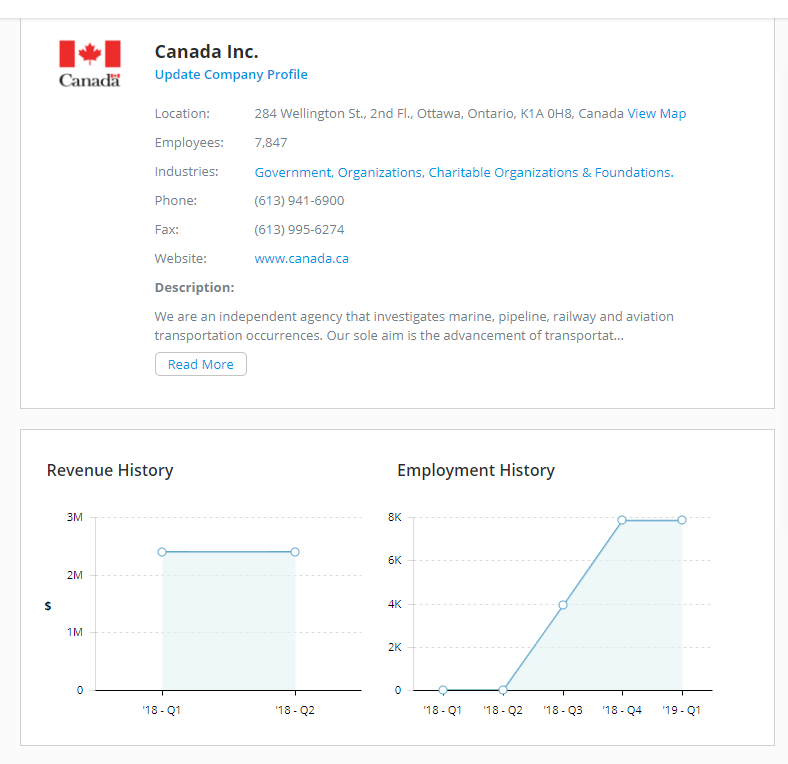
Share this:

Published by shawnpaulmelville

View all posts by shawnpaulmelville

People's Party of Canada

Canada Has a Quebec Problem

Sometime in the late 20th century a phenomenon arose in Quebec from far-left policy writers called the social economy (1). This creeping infiltration of socialism within the rest of Canada was largely enabled by the politicians elected from Quebec, beginning under the auspices of Pierre Trudeau, Jean Chrétien, then Paul Martin and culminating with the current Prime Minister, Justin Trudeau (2).
As of August 2018, another Quebec politician has thrown his hat in the ring. Maxime Bernier is proposing to oust Justin Trudeau in October of this year. He is presenting himself to Canadians as an advocate for free markets, taking a hard line against the Milk and Egg Boards, anti-multiculturalism and anti-corporate welfare. He has gathered a motley array of adherents from various sources, many disillusioned by the current political parties, looking for a new voice.
He set up his entourage from former colleagues and newer supporters: Martin Masse, a former staffer, now working as his senior advisor, Clinton Desveaux, a marketing specialist now working as fundraising director and Johanne Mennie, also a former staffer now filling the role of executive director for the PPC.
How is this related to this infestation of socialism within Canada? We previously published an article about Ms. Mennie’s involvement with promotion of the social economy which was well-supported with primary and secondary references. Many PPC supporters have refused to accept the truth of Ms. Mennie’s close involvement with the social economy initiative and the Tides Canada funding to forward this initiative. We referred to her attendance at the “Scaling Up the Canadian Social Finance Sector” conference on October 19-20, 2006 (3which was a Tides Canada Initiative. The claim was made that she was just a participant and was obliged to attend because it was part of her job.

Is Johanne Mennie a maligned bureaucrat?

The claim made to support Ms. Mennie’s innocence as pertains to being a key globalism financer was that she was just a bureaucrat doing her job. Why, if Ms. Mennie merely participated at this conference, did she then, on November 21 of the same year, attend a Privy Council meeting with three other members of the Tides Foundation team and lobby for social capital? (Figure #2)

Figure #2: On the left, meeting of the Privy Council. On the right, attendees at the Tides Foundation conference.

At the Tides Foundation conference, the objective was clear.

The Tides Canada had a clear political mandate as well: to build an alliances with political parties in order to “seed a social finance agenda.”

Figures #3, #4, #5:  The goal of the Tides conference

How is it possible to maintain that Johanne Mennie attended the meeting as a mere bureaucrat as is claimed by some members of the PPC (4)? Why would she then attend a meeting of the Privy Council and lobby for exactly the same socialist causes as were discussed at the Tides conference?
References were made by Coro Strandberg, author of “Canada 2030. Embedding Sustainability Into Corporate Governance” (5), at the Tides Conference to the urgent need for financial support through government agencies. This was an appeal to Ms. Mennie since her role was that of Deputy Director, Community Development and Partnerships Directorate, Department of Human Resources and Social Development (6).

Figure #6: Social Finance is Ms. Mennie’s #shop”.

It is easy to see that the meeting with the Privy Council was a follow-up to the Tides conference. During this meeting, Ms. Mennie spoke at length about the value of the social economy. Her words in the following screenshot summarize beautifully the urgency for social capital:

Figure #7: Embedded section of Privy Council discussion.

Who oversaw the HRSDC?

When looking into the actions of a bureaucrat, it is always advisable to look beyond to their superiors. At the time of the two meetings mentioned in this document, Johanne Mennie was working under Maxime Bernier (7). If in fact Ms. Mennie was a simple bureaucrat, is it then her superior that is to blame? In reading this quoted document, it is interesting to observe that Maxime Bernier himself was celebrating funding of the social economy through government subsidization (see embedded section of article by M. Bernier).

Figure #8: Excerpt from Maxime Bernier’s article quoted above.

Bernier remained Minister of Industry until August 2007. During this time AND beyond, Stephen Harper cancelled many Social Capital projects which earned him criticism from various sources (8), so clearly any promotion of the social economy was not under Mr. Harper’s purview. Even upon taking up his role as Prime Minister, Mr. Harper began cutting back on social funding, which act was decried as early as the privy council meeting in November of 2006 (see embedded quote of Mrs. Carol Hunter).

Figure #9: Quote from Privy Council meeting.

After Ms. Mennie’s time lobbying for the Social Economy and Social Capital, she went on to work with the Canadian Heritage Foundation and honed her skills at soliciting taxpayer funds to support various causes (9).
Implications
To fully grasp the magnitude of Ms. Mennie and Mr. Bernier’s involvement in the social economy initiative which is now undeniable, the reader must understand how closely linked this concept is to that of the UNGCM (10). To support this, we can fast forward to the Trudeau government’s recent promise of $755 million for social services for housing the homeless, the migrants and for jobs training (11). The information is available here as well:

Figure #10, #11

Clearly the social economy movement from Quebec is putting the taxpayer on the hook for enormous amounts of money, outlined in this article by Civilian Intelligence Network (2) and this is only the beginning as migrants continue to pour across the Quebec border. The creeping socialist infiltration of our Canadian schools, colleges, banks, industries, and political circles largely originating in Quebec from the numerous politicians elected from that province will soon be the end of free speech, freedom of choice and the end of Canada as we know it.
References:
(1) http://anserj.ca/index.php/cjnser/article/download/237/169
(2) https://civilianintelligencenetwork.ca/2019/02/18/soros-tides-foundation-and-the-social-economy-slush-fund/
(3) https://corostrandberg.com/wp-content/uploads/2006/12/scaling-up-the-canadian-social-finance-sector.pdf
(4) https://www.youtube.com/watch?v=zT4iezGSxSw&feature=youtu.be
(5) https://www.jflglobal.com/media/uploads/news/2018-06/Canada_2030EmbeddingSustainability.pdf
(6) http://apps.ourcommons.ca/ParlDataWidgets/en/intervention/1782905

(7) http://publications.gc.ca/site/archivee-archived.html?url=http://publications.gc.ca/collections/Collection/BT31-4-73-2006E.pdf

(8) https://www.theglobeandmail.com/news/politics/wealthy-foundations-wary-of-harpers-crackdown-on-charities/article4105884/
(9) https://openparliament.ca/committees/canadian-heritage/41-2/34/johanne-mennie-2/
(10) https://refugeesmigrants.un.org/sites/default/files/180713_agreed_outcome_global_compact_for_migration.pdf
(11) https://toronto.citynews.ca/2018/11/23/feds-social-finance-pledge-turns-canada-from-laggard-to-leader-experts-say/