QFAN – Even if Q is totally a psyop, it’s waking up millions and millions of people. I’m totally on the fence about Q for about the last 6 months…. but I’m still hopeful something good is happening behind the scenes.
But really, Q eventually led me to learn about the Zionists and a ton of other things and I know I’m not the only one.
Brendon you seem to make fun of any Q followers but you give zero effort in explaining your stance on why you’re so certain Q is a joke. Learning all these different truths about the massive corruption that’s been happening for hundreds of years is incredibly confusing to so many people… and yet you claim to want to help people learn the truth but give a shitty effort to teach people about Q…
Do you see how this can look suspicious to some people?
BRENDON ANSWERS Q RETARD –
Q = no solution. Q is a product of Steve Bannon et.al. Q does the “heavy lifting” on the “Zionist/Conspiracy” question. Adam Green does the heavy lifting on the “Jewish Question”. Why? Because part of the Zionist plan is to get American Jews to Israel – especially white Jews, highly educated who will vote for Netanyahu etc. And run the high technology sector that is being rapidly shifted from the United States – this is a national emergency. And “Q” says…[cue rolling spinifex and blowing wind down dusty street.] “Q” says nothing.
Greater Israel cannot happen without mass migration of Jews from the United States and Europe. Do you get it?
Silicon Valley and California is being emptied of high tech. It is moving to Silicon Wadi (Israel) and New York, east coast where it can be directly controlled by the Russian Jewish Israeli mafia – “Moscow on the Hudson”.
A possible calamity in California may be on the way – the splitting up of the United States into four separate, easily-controlled areas à la “The Turner Diaries”.
The high tech sector will be consolidated on the east coast, New York and Chicago rust belt. White Nationalist parties will gain ground in California. Maybe Adam Green will run. They will be well-funded – all from Robert Mercer et.al.
The aim is to ghettoize, isolate, separate, and consolidate along racial and ethnic lines.
ANONYMOUS groups and people are ALWAYS “them”. The truth is easy, you don’t need silly pretenses and riddles – it’s mind control, advertising and marketing garbage. You don’t GET millions of followers when you are the organic real deal – your life is miserable. You get no views. You are hacked night and day. You are stalked and harassed. Your kids are propositioned by drug dealers. Pedophiles stalk your nieces to school. Your house is broken into. Your cars trashed. Your bank accounts and Pay pal taken away.
You are either a congenitally stupid idiot, extremely naive, or one of them. I pick extremely naive. I have been around 20+ years of this. I have spoken to all the top people and I knew the serious players from the early to mid 2000’s. I knew a time of excellent debate, publishable forum posts with facts and figures written by professional journalists using the “then” anonymous internet. I remember university professors and media stars posting anonymously. And now we have “Q Sh*t”. Its SH*T. Do you understand? I am trying to stop you eating SH*T.
They gave us YouTube – and they took it away. They got rid of ALL the best players. Then they filled it with fake, vacuous, entertainment alien Q lost city of Atlantis SH*T. You have never eaten organic. You are a child of McDonalds SH*T. You don’t know any better.
ADDITION – “Q” is part of the Steve BANNON, Dr Steve PIECZENIK psychological warfare operation run along with Robert MERCER, Benjamin NETANYAHU, Cambridge Analytica (Now EMERDATA) and AGGREGATE I.Q. Both worked at Goldman Sachs. Both are Hollywood screen writers and producers and both have worked in psychological warfare. You are a retarded idiot man child [slap]. You are a moron [slap]. You are that toddler who finds a pot plant and sees the sheep sh*t fertilizer and thinks it’s chocolate candy [slap] and I have to slap the sh*t out of your hand before you put it in your mouth. Right now your face is covered in sheep sh*t and you are going “yummy”.
People at LIBERTY FORUM woke people up. People at NOLAJBS. Ezra Pound, Eustace Mullins, Ted and Alyn Pike, Bill Cooper, Colonel Sabot, Kay Griggs, Ernst Zundel, Germar Rudolf, Fred Leuchter, The Skunk, Danial Hopsicker, Daryl Bradford Smith, David Cole, Israel Shamir, Dr Israel Shahak, and on and on and on and on…
And whats the common denominator with all of these people? Endless harassment, death threats, physical attacks, jail, job loss and obscurity. Ala, East Germany and the Soviet Union.
And then there is “Q”.
The horse bolted. A lot of people gave everything, including their lives to get it out there – true heroes. And once the horse bolts, along come the opportunists, tourists, Nigerian E Begging Scammers, the psychological operators to appeal to you, grab your attention, flirt with you, divert you, re-position your attention, forming fake groups, fake channels, fake websites, fake issues.
They have huge funds, thousands of directly employed people and tens of thousands of associates and camp followers. It is a science. Just because a prostitute says you are handsome, does not mean she is telling the truth. Someone telling you what you want to hear while they slip the knife in is standard practice.
You need to study Co-Intel Pro and the break up of the Black Panther Party – there is your archetypal model.
These are professional people – and you are the sucker, the “john”, the lumpen proletariat.
The entire internet is a cesspool of sh*t with zero solutions. If you want to mix alien sh*t with blood-drinking lizards with a little studio and some fancy graphics and a good sound mic you will do well. If you want to organize, lobby, stick to facts and produce materials you can take to the managerial class with a business plan of action and coordinating diverse people into action….you will find your life extremely difficult.
Alex Jones was told in 2008 he could continue doing his show and making money, BUT, he could not “organise” or provide platforms for his audience to organise. This was at the height of his drug and prostitute use hanging out in LA with Gary BUSEY and Charlie SHEEN. Jones now clears $40,000USD a week, in his pocket. His supplement line was started by Dr Stephen PIECZENIK – devote of Henry KISSINGER, psychological warfare operator and Goldman Sachs executive and CFR member.
You just do not get it do you?
Post 2008 financial crisis they knew a public backlash storm was coming – they created the opposition to divert the anger and possible physical action into a harmless world wrestling federation show – it’s all fake. Left/Right – Trump/Hillary etc…
All the while the US high technology base is pilfered and the Republic dangles by a thread while you jerk off to your horse puckey “Q” show. You are an ignorant fool at best. Cease and desist.
Lets see the anonymous “Q” tell the American public Intel is dead and Israel did it. Let “Q” explain the catastrophe of China getting their hands on AMD and Taiwan Semiconductor…COME ON! You dumb ass! Get your messiah to tell the truth…never gonna happen.
Only desperate infantile shallow retarded monkeys take “Q” seriously. Weak and desperate people – – – and Robert MERCER, Steve BANNON, Benjamin NETANYAHU and Steve PIECZENIK know just how to channel the desperate sheep.
CLICK HERE, for Wikipedia listings on topic. http://archive.is/mslRy CLICK HERE, for archive of 1993, 8th Report, Standing Committee on External Affairs and International Trade, House of Commons, Parliament of Canada, Spring 1993, chaired by Hon. Jon Bosley. (archive) CLICK HERE, for February 1996 for UN Parliament. http://archive.is/e9IMH CLICK HERE, for the 2007 FAC Standing Report, Democratic Development. CLICK HERE, for “conservative” Senator Douglas Roche.
While the story of the United Nations Parliamentary Assembly (UNPA) is still in the news, it is still a theory, at least for now.
However, Canada’s globalist politicians have been at it since well before 2007. In fact, Brian Mulroney’s Government originally approved the idea in 1993.
Why should Canadians care? Well, if you think getting fair and adequate representation from Ottawa is difficult, try getting it from a global government.
3. Timeline For UN Parliament
Spring 1993 – CDA HoC Foreign Affairs Comm endorses UNPA
July 1995 – Brian Mulroney replaced by Campbell as PM
October 1993 – Jean Chretien elected as PM
1996 – Support in Chretien’s Gov’t for UNPA
2002 – Sen. Douglas Roche endorses UNPA
January 2006 – Harper replaces Martin as PM
July 2007 – CDA HoC Foreign Affairs Comm endorses UNPA
August 2007 – Bernier replaces MacKay as FA Minister
November 2007 – First UNPA Int’l Meeting, Switzerland
November 2008 – Second UNPA Int’l Meeting, Belgium
October 2009 – Third UNPA International Meeting, USA
July 2010 – Trudeau endorses UNPA as an MP
October 2010 – Fourth UNPA Int’l Meeting, Argentina
October 2013 – Fifth UNPA Int’l Meeting, Belgium
September 2015 – Harper signs Agenda 2030October 2015 – Trudeau replaces Harper as PM
4. Quotes From 1993 Standing Comm Report
The decline in Canadian support for things international – and the decline is palpable – is explained more by loss of self-confidence among Canadians than by lack of caring. There is no more important task before us than to recover some of that confidence and no more important means of doing so than through the empowerment of the United Nations. People must see that the centre can hold and that they have a role to play in making it so.
By way of building the public and political constituency for the United Nations, the Committee recommends that Canada support the development of a United Nations Parliamentary Assembly (21) and that we offer to host the preparatory meeting of the Assembly in the Parliament Buildings as the centrepiece in our celebration of the 50th anniversary of the United Nations in 1995. We would further recommend that the Government work closely with the national organizing committee for the 50th anniversary and encourage the active participation of non-governmental organizations in the planning and holding of the Assembly.
Conclusion . In closing this long letter the Committee wishes to commend the Government for being one of the few that has contributed energetically to keeping An Agenda for Peace alive. But alive is not good enough. Much more needs to be done. The proposals of the Secretary General should be the beginning of a vital international process of reform and renewal of the United Nations system. Canada should work hard to help make it so. The Committee intends to keep the empowerment of the UN high on its agenda and to hold additional hearings in the new session of Parliament. We would ask that the Minister respond in writing to this letter by early May.
This is what it sounds like. The Mulroney Government, which calls itself “conservative”, has the Foreign Affairs Committee approve in principle participation in a United Nations Parliament.
Note: Mulroney had a huge majority at that time, so there was no real need to get opposition approval on this. So no one can say he was pressured into doing it.
5. Approval Of UNPA In 1996
In recent years the demands on the United Nations have increased. In response, the organization has been given more autonomous powers and responsibilities. At the same time, it is necessary that the UN maintain support for its actions and decisions of the world’s citizens and governments. Creation of a UN Parliamentary Assembly is a vital first step in this process of democratizing the United Nations and ensuring its legitimacy in the eyes of world public opinion.
The European Parliament and the Parliamentary Assembly of the Organization for Security and Cooperation in Europe (OSCE), demonstrate the important contributions that supranational parliamentary bodies can make to the work of international institutions. The history of both of these supranational parliaments also demonstrates the important, indeed essential, role in their creation to be undertaken by committed national parliamentarians.
Under Andrº Ouellet, Canadian foreign policy was distinguished primarily by its emphasis on international trade issues. Trade promotion overshadowed some other progressive initiatives taken by Canada, notably Canada’s work at the UN on creation of an International Criminal Court, and the Canadian peacekeeping proposal (entitled Toward a Rapid Reaction Capability for the United Nations) which was presented at last Fall’s session of the UN General Assembly.
As Foreign Affairs critic when the Liberals were in opposition, Lloyd Axworthy was a strong proponent of arms control and human rights issues and is a strong advocate of improved multilateral institutions. Many analysts expect that under Mr. Axworthy these international law and ‘world order’ issues will become a greater priority.
In the Spring of 1993, the House of Commons Standing Committee on External Affairs and International Trade (SCEAIT) brought forward a report on Canada’s role in the United Nations. One of the Committee’s three recommendations called for Canada to support creation of a United Nations Parliamentary Assembly (UNPA), and for Canada to host the preparatory meeting of the Assembly in the Canadian Parliament Buildings. Following release of the SCEAIT Report, an ad hoc committee of parliamentarians and non-governmental representatives was established to build political support for a UNPA. Lloyd Axworthy was among a handful of Liberals who participated in the ad hoc Committee’s two meetings. Unfortunately, very little was accomplished before the 1993 general election was called and the 1993 session of the House of Commons ended.
The New Liberal Chretien Government shares the globalist appetite and ideas that the previous Mulroney Government did. More support for creating of the actual world government.
6. Senator Douglas Roche & UNPA, 2002
The arguments below contain these assumptions in their essence. However, it is understood (perhaps reluctantly) that world federalism and the end of the state system is not in the mainstream political agenda for a contemporary UN. The objectives of UN reform and addressing issues of international governance are reasonable and feasible in contemporary politics. Implications for a Kantian vision of world federalism can be bruited, but at this point not much more.1 A UNPA would not be a world parliament, although some supporters and detractors of a UNPA think of it as a step towards a form of world government or global federalism.
World government is not a necessary criterion in discussing a United Nations Parliamentary Assembly. World government is not the case here. What is at issue is governance, by which is commonly understood to be the regulation of an increasingly complex and interconnected world comprising States, societies, corporations, individuals and epistemic communities.
The question of a UNPA, then, becomes one relating to a UNPA within the UN system and a UNPA within both the growing interconnectedness of trans-national politics and existing networks of global governance. Governance, transparency, democracy, diplomacy and international norms of behaviour – how states behave when their affairs are so intertwined – these are the issues in the background when discussing the formation of a UNPA.4 Specifically discussed below are those aspects of these phenomena that today seem to drive the argument for a UNPA.
Some nice double speak here. Senator Roche is trying to argue that a United Nations Parliament would not actually amount to a world government. Okay.
7. Quotes From 2007 Standing Comm Report
CHAPTER 8 CANADA’S ROLE IN INTERNATIONAL ORGANIZATIONS AND MULTILATERAL APPROACHES TO DEMOCRATIC DEVELOPMENT [W]e need democracy as a basis of a safer world, we need democracy as the basis for a just system of international relations … Her Excellency Nino Burjandze, Speaker of the Parliament of Georgia
The Committee has already made reference in previous chapters to Canada’s welcomed multilateralist approach to democratic development and to its valued contribution to multilateral bodies. We believe that should be continued, and enhanced where most effective, as part of the evaluation of all Canadian support for international democratic development that we have recommended. The Committee observes as well that international organizations are increasingly expanding their work into all areas of democratic development and governance. For example, in our meeting at the Commonwealth Secretariat, its Secretary General told the Committee that the Secretariat is trying to work both at the cultural level and with parliaments and political parties on understanding the role of the opposition and on introducing accountability measures. Mr. Christopher Child, Advisor and Head of the Democracy Section, commented that “we’d like to do much more party training.” Strengthening party systems has also become an important area of work for the International Institute for Democracy and Electoral Systems (IDEA). The role of political parties in democracy-building was the subject of the Council of Europe Forum for the Future of Democracy which took place in Moscow in October 2006 with the involvement of the Council of Europe Parliamentary Assembly to which Canada sends observers.
The World Bank, to which Canada is an important contributor through the Department of Finance, is not allowed by its Charter to take into account the nature of the political regime, hence its role in “political development is obviously constrained,” as Sanjay Pradhan, Sector Director in the Public Sector Governance Unit told the Committee in Washington, D.C. However, within a broader conception of good governance that is linked to democratic development: “We are doing a lot in terms of accountability of the state to its citizens.” So the Bank works on things that might be considered “building blocks” of democracy. Mr. Pradhan distributed a paper “How Ongoing Operations of the World Bank Currently Strengthen Participation and Accountability,” which lists six major program areas for Bank interventions. One of these includes “parliamentary capacity development.”
Mr. Steen Lau Jorgensen, Director of the Bank’s Sustainable Development Network, elaborated that the Bank has programs directly involving local communities in development decisions, thereby increasing the effectiveness of projects. In the Bank’s experience, more open countries do much better in achieving their development goals. The Bank therefore has an interest in building the capacity of civil society and it now even gets close to election-related processes, as in Ivory Coast where it is helping with the compiling of a national registration list. In this case, the Bank is working with the EU and the UN and through the country’s prime minister’s office. Registration is not just about elections but about establishing citizen’s eligibility for social services.
As Mr. Jorgensen put it, there has been a “fundamental change in mindset” towards seeing poor people as citizens having rights and responsibilities. The Bank’s consequent shift away from major infrastructure projects since the late 1980s has been approved by its Board. The Bank sees this as linked to development effectiveness, which incorporates a good governance and anti-corruption agenda. For example, in the public procurement process, the Bank has established oversight through a “Procurement Watch” mechanism, and it now has a “zero tolerance” policy on corruption in World Bank-supported projects. Mention was also made of a “Global Integrity Alliance” as part of an anti-corruption strategy involving leaders in the recipient countries.
The role of a major international financial institution like the World Bank is noteworthy in another sense, since many believe that these powerful international organizations are not themselves sufficiently democratically accountable to the publics in the countries which make up their memberships. Several of the Committee’s witnesses addressed the issue of the need to advance democratization processes from the local and national levels of governance, to the dimension of global governance. For example, John Foster of the North-South Institute referred to the Finnish-supported “Helsinki Process” which produced a 2005 Report, Governing Globalization-Globalizing Governance, that made recommendations for democratizing oversight of the global economy and strengthening the role of parliamentarians and civil society in that regard. He also made reference to the work of the Forum International de Montreal — which gets most of its funding from non-Canadian sources — and to the Spanish-based “World Forum of Civil Society Networks and its Campaign for an In-Depth Reform of the System of International Institutions…”
The presentation to the Committee by the World Federalist Movement — Canada also devoted a lot of attention to advancing democratization at the level of international institutions, in particular in the context of United Nations reforms. Indeed it noted that this Committee in 1993 had supported the concept of a parliamentary assembly at the UN, and it went on to state: In April 2007, the Committee for a democratic UN (an NGO organizing network working with parliamentarians) will present publicly the “International Appeal for the Establishment of a United National Parliamentary Assembly, at press conferences around the world. Following the Appeal launch in April, an international parliamentary conference is planned for October 2007 in Geneva.
The World Federalist representatives urged the Committee to give favourable consideration to this international appeal. We note as well that the European Parliament has supported the establishment of UN Parliamentary Assembly as part of overall UN reform, most recently in a resolution of June 9, 2005.
In terms of working through international organizations, the biggest of all is of course the UN system. Most of the UN funding related to democratic development and governance goes through the United Nations Development Program (UNDP). Indeed, when the Committee met with the UNDP’s Pippa Norris, Director of the Democratic Governance Group, Bureau of Development Policy, and other senior staff (many of them Canadians) at the UN in New York, it was noted that this group is the largest within the UNDP.
Ms. Norris shared with the Committee the group’s Strategic Plan, 2008-2011, and explained that its mandate in the area of democratic governance comes from various UN sources including the Millennium Declaration and a General Assembly resolution in 2000, the 2002 statement Democratic Governance Practice in UNDP, and a recent high-level panel report Delivering As One. Documents provided to the Committee included the UNDP’s Global Programme on Parliamentary Strengthening, on Support for Arab Parliaments, on Strengthening the Role of Parliaments in Reconstruction and the Prevention of Conflicts, and the annual report of its Democratic Governance Thematic Trust Fund. There was also a briefing note on CIDA-UNDP collaboration in Afghanistan. On gender issues, the Committee was told that an international knowledge network on women and politics was to be launched in February 2007, centred on an on-line tool to help education in this area. In addition, the United Nations Development Fund for Women (UNIFEM) does a lot of work on civic education for women. On electoral assistance, it was noted that collaboration between Elections Canada and UNDP goes back as far as Cambodia in 1993. However, another Canadian staff member Elissar Sarrouh (Policy Advisor, Public Administration Reform) — who formerly worked at the Parliamentary Centre — added that Elections Canada is always short of resources. So when countries express interest in having Canadian expertise, sometimes the resources are not there.
On the UN’s work on election processes, the Committee also met with Craig Jenness (again, a Canadian), Director of the Electoral Assistance Division within the Department for Political Affairs, who explained that this takes the form both of direct electoral support, and work on electoral best practices. Rather than election observation, the UN focuses either on providing assistance to electoral offices in host countries, or on assisting with electoral operations as part of peacekeeping missions in places like the Democratic Republic of the Congo or Haiti. The budget is relatively small, with a dozen people at headquarters, although a large roster of people — including many Canadians — work around the world. Also, there is a small trust fund to allow the quick deployment of people when necessary to places like Nepal. Some 102 UN member states — and four non-member states have requested electoral assistance since 1992, and over 30 countries are now receiving or have requested such assistance — most of them in Asia, Africa and the Middle East.
One important reason UN help is requested is that this helps legitimate the result and get it accepted — for example, in the Democratic Republic of the Congo. The UN does not work with countries unless asked by the host government or there is a Security Council mandate. The UN tries to not run elections themselves, but to assist the host government in setting up the necessary structures to do so. In post-conflict situations, a problem that often comes up is that everyone wants to win an election, but it is often difficult to convince the losers that there is a real role for oppositions. According to Mr. Jenness, “parliamentarians can help” with that since they can talk to colleagues in other countries on a peer-to-peer basis.
Before turning to UN’s innovation of a “Democracy Fund” in 2005, and Canada’s potential role in that, it is important to recognize that notwithstanding all of this work, many questions still surround the UN’s involvement in democratic development, as well as that of international organizations such as the Community of Democracies or alternatives, which can be more explicit than the UN about their pro-democracy aims since their memberships are limited to at least nominally democratic states.
In observing that “the UN has often been in a situation where it has been an advocate of democracy”, Jane Boulden, Canada Research Chair in International Relations and Security Studies at the Royal Military College of Canada, told the Committee: There are a number of member states that are not happy about the fact that the UN should play a role in advocating democracy, even when it comes to post-conflict situations where parties have agreed to democracy as part of the peace agreement. This relates partly to the ongoing questions about sovereignty. With the responsibility to protect, for example, there’s been an increasing acceptance that sovereignty is not sacrosanct, and for those who are resistant to these ideas, the idea that democratization or democracy is an important universal value is seen as yet another hook that western states can use as a criterion for intervention in states.
If democracy is to be put forward as a universal value, we need to be able to make that case more effectively than we are now. That’s a factor the United Nations is grappling with, but I think it goes across the board for states as well. On this point, the questions of perceptions relate as well to the image or the perception in a number of states that the UN engages in a number of double standards. Why do we, through the United Nations, react to some conflicts and by extension then deal with some post-conflict scenarios with resources and commitment, and not others? When we feed that into the broader question about whether democracy is a western value or not, you can see how the whole package becomes an issue.
Scepticism about UN multilateralism combined with the need to engage the United States multilaterally has led to various alternatives being suggested. For example, two prominent U.S. scholars have recently made a detailed proposal for the establishment of a 60-member “Concert of Democracies.”
Yet to get around the fact that the UN includes many non-democracies, there has already been the creation of the Community of Democracies in 2000, with Canada as a founding member, and which met for the first time at the UN in 2004 as a UN “Democracy Caucus”. The Committee was told during our New York meetings in February 2007 that the 100-member “Caucus” is currently chaired by Mali, which is also an active member of the Group of New and Restored Democracies. His Excellency, Cheick Sidi Diarra, Ambassador and Permament Representative to the UN of Mali, was among a group of UN ambassadors and permanent representatives with whom the Committee met. We have already referred in Chapter 4 to Canada’s participation in the Community of Democracies (CD). One of our Canadian witnesses, Jeffrey Kopstein argued that, given the UN’s weaknesses and limitations, the CD should be bolstered. In Washington, where we met with Richard Rowson, President of the CD’s Council, Theodore Piccone, Director of the Democracy Coalition Project (and representative of the Club of Madrid in Washington) argued that “Canada should be a member of the [CD] Convening Group,” and that notwithstanding our multi-lateralist reputation, Canada “has been mostly at the margins in this regard.” Others were less convinced of the CD’s effectiveness. Richard Haas, President of the Council on Foreign Relations, told the Committee that the CD defines its democracy membership criteria too broadly and is too large to be a meaningful actor. Thomas Melia, Deputy Director of Freedom House told the Committee in Washington that the Convening Group of the CD represents in part the strategic interests of the member governments. For example, Morocco is a member although it does not meet the democracy criteria. Mr. Melia also had some cautionary words on trying for global coordination, stating that “a lot of effort can be diverted into coordination.” Instead he saw the need for “complementarity,” and “the way to pursue that is to build one’s niche.” Gareth Evans, President of the International Crisis Group, has also cautioned:
Don’t pin too many hopes on Democracy Caucuses and similar grand international strategies. While in principle an attractive idea, there are simply too many institutional and interest differences between democratic countries for a united front to be sustained on anything very much, and it is not at all clear that the tentative moves to create such mechanisms have so far placed any useful pressure on non-democracies, or generated any net positive returns.
At the same time, Mr. Evans, who remains a strong believer in a strengthened and reformed UN system, points out that individual democratic countries, notably those with great-power interests such as the U.S., are often not the best placed to promote democratic development. Even if, as several U.S. witnesses told the Committee, Canada is sometimes able to do things that the U.S. cannot, Canada cannot go it alone in this field either. Mr. Evans argues that: “One way to have an impact without such visible badging [association with Western big-power interests] is working through collaboration with multilateral coordinating mechanisms in the UN and elsewhere — the new UN Democracy Fund now getting off the ground will hopefully prove of real utility in this respect.”
The Committee shares that hope. Indeed, there is no substitute for action by the UN, for all its faults, since it is the only truly global body. We, too, want to see it reformed and made into a more credible instrument for advancing democratic development. With respect to the UN Democracy Fund (UNDEF) set up as a result of the September 2005 UN Summit, it is supported through voluntary donations not assessed contributions. The largest donor by far is the U.S., and the second largest donor has been India, the world’s most populous democracy, with a contribution of US$10 million. That amount was matched by Japan in early March 2007, adding to UNDEF’s funding capacity of about US$ 65 million, and making it the Fund’s 28th donor country. So far Canada is not among these.
When the Committee met with UNDEF representatives, Acting Executive Director Magdy Martinez-Soliman and Senior programme Officer Randi Davis (a Canadian) in New York in February 2007, Mr. Martinez-Soliman observed that the Fund is the first UN organization to use the word “democracy” in its title.377 Moreover, parliaments have been one of the better allies of the new fund; UNDEF staff having met with delegations from India, the United Kingdom, the European Union, the United States and others, now including Canada. The visit of the Committee was prominently noted on UNDEF’s web site (http://www.un.org/democracyfund/). It was made clear to the Committee that Canada’s involvement would be welcomed, especially as Canada’s democracy is looked upon favourably by many countries in the world.
The idea for UNDEF was explained as a U.S. initiative proposed as part of the UN reform debate along with priorities such as human rights, management reform and a Peacebuilding Commission. (The Committee also met separately with Canadian Carolyn McAskie, UN Assistant Secretary-General in charge of the Peacebuilding Support Office.379) UNDEF currently works mostly through civil society organizations as well as partnerships with other UN organizations, including peacekeeping missions. Its first funding tranche in August 2006 involved some 70 NGOs, including in Canada the Parliamentary Centre and a journalists group in Toronto. Importantly, UNDEF funding also comes from the South; it is not in the “import-export” business in terms of democracy, and does not offer a democratic model for others to copy. Significantly, too, UNDEF does not require host government permission when it decides on funding projects. It operates with the support and legitimization of the Secretary-General and the states that make up its board, composed of the six largest contributors. UNDEF is also one of the earliest examples of the “One UN” model proposed by the report of a recent High Level UN Panel on Coherence, Delivering as One,380 that was also referred to in the Committee’s meeting at the UNDP.
UNDEF is still a fledgling organization with only six staff (as of February 2007), and has just starting work on the ground, although it already has some 125 projects in 110 states and territories. Its regional priority is Africa (37% of project funding), followed by least developed countries outside of Africa. Project decisions are made on the basis of detailed proposals after consultation with the UN’s Department of Political Affairs and other UN organizations active in each country, following which a short list is made and presented to the board, which makes an even shorter list for presentation to the Secretary-General. With no formal advertising, UNDEF received over 1,300 applications in its first two weeks of operation — although about 700 of these did not meet its criteria. (Even when UNDEF did not fund projects, however, it has shared its database of proposals with other UN bodies, so these projects may get funding from elsewhere.)
The UNDEF governance structure is bi-level: one composed of UN member states, and one of NGOs, respecting geographic balance, and with an advisory board that includes international democracy experts such as Guillermo O’Donnell cited by the Committee in Chapter 1. Asked why UNDEF has accepted funding from states such as Qatar that are not fully democratic, Mr. Martinez-Soliman responded that UNDEF does not judge the degree to which its donors are democratic, but poses the larger questions of: Do the citizens within a state think it is democratic, and do other states think so?
Mr. Martinez-Soliman added that UNDEF has about 15 projects that work directly with political parties in countries such as Bolivia, Serbia and Peru. There are obviously sensitivities involved in such work. Observing that some countries have tightened their legislation on the transfer of foreign money to NGOs, in order to prevent these countries from shutting the door, UNDEF specifies that NGOs must be recognized either nationally or internationally. UNDEF also works in partnership with global and regional interparliamentary forums — for example, the Inter-Parliamentary Union (IPU), particularly on the issue of support for increasing the number of women parliamentarians, and including the Assemblée parlementaire de la francophonie.
The Committee was told, by our Ambassador and Permanent Representative to the United Nations John McNee, that Canada’s official position on UNDEF remains one of “wait and see.” We agree that UNDEF is a work in progress. But at the same time, it is part of UN reform and a global UN effort to take democratic development seriously. Surely that goal merits Canadian support. We note as well that among UNDEF’s donors are five of Canada’s G7 partners and its Commonwealth partner, Australia. Accordingly, we believe that Canada should consider whether to become a UNDEF donor.
Finally, there is a recurring theme that has struck the Committee during its meetings with international organizations supported by Canada that are involved in democratic development: namely, the impressive number of Canadians who are working in these organizations, often at senior levels. This is a great pool of expertise and experience upon which to draw. While some of these Canadians may be attracted back to Canada by the new Canada foundation for international democratic development that we proposed in Recommendation 12, it is also a good to have Canadians in positions of influence inside the multilateral organizations that Canada funds.
The Committee believes that a greater effort should be made to tap into the knowledge accumulated by Canadians working in multilateral organizations. This could enrich Canada’s own approach to democratic development as it is elaborated through an enlarged Democracy Council and through the independent Canada foundation that we have proposed.
The Foreign Affairs Committee of Stephen Harper’s Government also approved the idea of participating in a United Nations Parliamentary Assembly in July 2007. It seems that all of these successive administrations are globalists.
8. Recommendations From 2007 Report
Recommendation 19 The independent evaluation of all Canadian support for democratic development that we have recommended should also assess the effectiveness of multilateral channels to which Canada provides funding. That evaluation should guide appropriate funding levels.
Recommendation 20 Recognizing that the future challenges of democratization processes involve governance at the level of international organizations, as well as in national and local settings, the Canada foundation for international democratic development should include these dimensions within its mandate, and should consider related proposals for support from Canadian non-governmental bodies and civil-society groups working in this area.
Recommendation 21 As part of the essential role of a reformed and strengthened United Nations in global democratic development, the Parliament of Canada should give favourable consideration to the establishment of a United Nations Parliamentary Assembly.
Recommendation 22 In light of the establishment of the United Nations Democracy Fund (UNDEF) as part of UN reform proposals in 2005, Canada should consider whether to become a donor to UNDEF.
Recommendation 23 Taking into account the expertise and experience on democratic development that has been accumulated by Canadians working in this field through multilateral organizations, Canada should make an effort to tap into this pool of knowledge in furthering its own approach to democratic development.
Exactly what it sounds like: create and participate in a United Nations Parliament.
9. Trudeau Endorses UN Parliament
Our current Prime Minister endorsed the concept back in 2010. It seems doubtful that he has changed his mind since.
Interestingly, Green Party leader Elizabeth May (who also sits on the Trudeau Foundation) has endorsed this as well.
10. CDA Globalist Gov’ts All In Support
Successive Canadian Governments all support being part of a UN Parliament if it ever became a reality. Canada is pretty screwed.
(The globalist UN, showing its true colours once again)
(In 2007, the Canadian House of Commons Foreign Affairs Committee voted to endorse the idea of the UN Parliament. Stephen Harper was Prime Minister. Self-identified “populist” Maxime Bernier would soon be the Foreign Affairs Minister, and said nothing.)
(Seriously, this was previously approved in 1993?)
To all the conspiracy theorists who believe that the UN is proposing setting up a one world government, your fears just became validated.
The UN formally proposes to do exactly that.
2. Quotes From Site
The proposal of a UN Parliamentary Assembly
In this age of globalization, more and more issues have a global dimension that requires global cooperation. At the UN and other international fora, governments come together to negotiate and decide on policies that affect us all. . The UN Charter begins on the promising opening words: “We the peoples.” However, one will seek in vain for any clause in the document that specifies a means by which ordinary people can play a role in the organization’s deliberations and decision-making. . The bodies of the UN and international organizations are occupied by officials who are appointed by the executive branches of national governments. In view of the growing importance of international organizations and their decisions, this is no longer sufficient. . A United Nations Parliamentary Assembly (UNPA) for the first time would give popularly elected representatives a formal role in global affairs. As an additional body, the assembly will directly represent the world’s citizens and not governments. . Initially, states could choose whether their UNPA members would come from national parliaments, reflecting their political spectrum and gender equality, or whether they would be directly elected. Eventually, the goal is to have all members directly elected. . Starting as a largely consultative body, the rights and powers of the UNPA could be expanded over time as its democratic legitimacy increases. The assembly will act as an independent watchdog in the UN system and as a democratic reflection of the diversity of world public opinion. . In the long run, once its members are all democratically elected, the assembly could be developed into a world parliament which – under certain conditions and in conjunction with the UN General Assembly – may be able to adopt universally binding regulations. . In short, the UN should evolve from what many believe to be a generally ineffectual “talk-shop” into a viable democratic and legislative body.
Okay, let’s break this down a bit:
”In this age of globalization, more and more issues have a global dimension that requires global cooperation. At the UN and other international fora, governments come together to negotiate and decide on policies that affect us all.”
So what? This seems to deliberately conflate cooperation with sovereignty. Nations can and do discuss and cooperate on issues all the time. This is a solution to an artificial problem.
”The UN Charter begins on the promising opening words: “We the peoples.” However, one will seek in vain for any clause in the document that specifies a means by which ordinary people can play a role in the organization’s deliberations and decision-making.”
Searching in vain for any clause that says ordinary people can play a role in decision making? Is this a good thing? Shouldn’t people have some ability to influence decision making?
”The bodies of the UN and international organizations are occupied by officials who are appointed by the executive branches of national governments. In view of the growing importance of international organizations and their decisions, this is no longer sufficient.”
How so? Do we not want people who are directly chosen by the host nation to be taking part in such discussions?
”A United Nations Parliamentary Assembly (UNPA) for the first time would give popularly elected representatives a formal role in global affairs. As an additional body, the assembly will directly represent the world’s citizens and not governments.”
Logistical question: how do you decide if a leader is ”popularly elected”? Military dictators frequently hold sham elections and win close to 100% of the vote.
Further, what if the values of a block of nations (such as the 50+ members of Islamic nations) democratically overrule nations which believe in human rights?
”Initially, states could choose whether their UNPA members would come from national parliaments, reflecting their political spectrum and gender equality, or whether they would be directly elected. Eventually, the goal is to have all members directly elected.”
If they are not being directly elected by their people, then who is electing them? Should the UN get to decide who ”represents” the Nation of Canada, the US, Australia, or Japan?
”Starting as a largely consultative body, the rights and powers of the UNPA could be expanded over time as its democratic legitimacy increases. The assembly will act as an independent watchdog in the UN system and as a democratic reflection of the diversity of world public opinion.”
Ah, non-binding and consultative bodies which eventually become legally binding? Kind of like the UN Global Migration Compact.
How exactly would there be ”oversight” when this would effectively take away actual representative government from host nations?
”In the long run, once its members are all democratically elected, the assembly could be developed into a world parliament which – under certain conditions and in conjunction with the UN General Assembly – may be able to adopt universally binding regulations
.
In short, the UN should evolve from what many believe to be a generally ineffectual “talk-shop” into a viable democratic and legislative body.”
How would this possibly be democratic? It takes control even further from the public. If you think your MP or MPP or MLA or Senators don’t represent you now, how would you gain more representation from being even further removed.
On behalf of the British Broadcasting Corporation BBC, in 2004/05 the research institute GlobeScan conducted representative surveys in 18 countries representing 61% of the world population.
In one of the questions concerning reforms of the United Nations, participants were asked about their opinion on “creating a new UN Parliament, made up of representatives directly elected by citizens, having powers equal to the current UN General Assembly that is controlled by national governments.”
On average, 63% supported the reform proposal, while only 20% rejected it. For the first time, this survey provides empirical evidence that the world’s citizens overwhelmingly support the establishment of a directly elected world parliament.
Country results
In every surveyed nation the supporters of a UN Parliament significantly outnumbered the opponents. Overall, support to opposition margins show overwhelming majorities in all nations favoring the creation of a UN Parliament.
Let’s see: Only 18 countries were surveyed
UN claims these 18 countries represent 61% of the population.
UN Claims that 63% of populations surveyed support global government 1/ Argentina 2/ Australia 3/ Brazil 4/ Canada 5/ Chile 6/ China 7/ Germany 8/ Great Britain (UK) 9/ India 10/ Indonesia 11/ Italy 12/ Mexico 13/ Phillipines 14/ Poland 15/ Russia 16/ South Korea 17/ Turkey 18/ USA
Assuming the numbers are true, that means that all but 18 countries were left out of the survey
It means that 39% of national populations were not consulted at all
It means that 37% (of consulted nations) oppose the measure.
A better level might be to use (0.63)*(0.61) = .03843 = 38% (A tad silly, but this research is not representative)
Assuming this research is even accurate, that would mean that only 38% would support such a measure. Of course, the site doesn’t list any of the SAMPLE SIZES, which would help give a more accurate picture.
Were 100 people interviewed in each country? 1,000? 10,000? Can we see the questions that were asked?
Of course, none of this addresses the central question: why is it that there has been no public consultation on us signing away our sovereignty? Shouldn’t we have the final say?
Wait, globalists don’t care what people think. Now it makes sense.
4. Globalist Politicians In Canada
Justin Trudeau, and Elizabeth May are on here. Jagmeet Singh probably would be, if he actually was an M.P.
Members of Parliament from Canada Diane Bellemare Senator, economist and politician from Quebec, Canada
(2013-12-17)
Carolyn Bennett MP, Canada (2009-07-07)
Sheri Benson Member of Parliament for Saskatoon West, Canada (2017-03-10)
Daniel Blaikie MP, Canada (2017-03-06)
Rachel Blaney MP, Canada (2016-10-26)
Sean Casey Member of Parliament, Canada (2011-09-01)
François Choquette MP, Canada (2011-06-09)
David Christopherson Member of Parliament, Canada (2011-06-21)
Jane Cordy Senator, Canada (2018-01-19)
Jane Cordy Senator, Canada (2018-01-31)
Nathan Cullen MP, Canada (2010-10-05)
Julie Dabrusin Member of Parliament for Toronto-Danforth, Canada (2017-04-18)
Don Davies MP, elected 2008; Lawyer, trade union representative, Canada (2007-05-25)
Fin Donnelly MP, Canada (2010-04-19)
Julie Dzerowicz MP, Canada (2017-03-16)
Wayne Easter MP, Canada (2012-02-09)
Art Eggleton Canadian Senator, Canada (2009-04-28)
Ali Ehsassi MP, Canada (2017-04-07)
Nathaniel Erskine-Smith Canada (2016-05-12)
Hedy Fry MP, Canada (2009-06-15)
Marc Garneau MP; first Canadian in outer space; President, Canadian Space Agency (2001-2006), Canada (2012-03-24)
Randall Garrison MP, Canada (2012-02-24)
Pamela Goldsmith-Jones MP for West Vancouver-Sunshine Coast-Sea to Sky Country. Parliamentary Secretary to the Minister of International Trade, Canada (2017-05-17)
Claude Gravelle Member of Parliament, Nickel Belt, Canada (2010-07-29)
Laurie Hawn Member of Parliament since 2006 Privy Councillor Royal Canadian Air Force Veteran, Canada (2012-02-16)
Carol Hughes MP, Canada (2012-02-16)
Mobina Jaffer Member of the Canadian Senate, representing British Columbia, Canada (2009-12-18)
Janis G. Johnson Senator, Canada (2009-05-01)
Peter Julian MP, Canada (2008-02-25)
Frances Lankin Senator, Canada (2016-11-15)
Dr. Hélène Laverdière Foreign Affairs Critic for the New Democratic Party of Canada and MP for Laurier – Ste-Marie, Canada (2012-02-27)
Dominic LeBlanc MP, Canada (2012-03-01)
Hélène LeBlanc MP, Canada (2012-02-28)
Alistair MacGregor MP, Canada (2018-02-09)
Brian Masse MP, Canada (2009-04-30)
Irene Mathyssen Canada (2012-03-12)
Elizabeth May MP; Leader, Green Party of Canada, Canada
(2007-05-11)
Dr. John McCallum Canada
(2012-03-13)
The Honourable John McKay P.C., M.P. Canadian Member of Parliament for the Riding of Scarborough-Guildwood., Canada
(2012-02-28)
Alexandra Mendes MP, Canada (2009-04-28)
Don Meredith Senator, Canada (2017-03-01)
Maryann Mihychuk Canada (2018-02-14)
Wilfred P. Moore Senator, Canada (2011-06-21)
Isabelle Morin MP, Canada (2012-02-28)
Joyce Murray MP, Canada (2009-05-09)
Thanh Hai Ngo Senator, Canada (2018-01-22)
Robert Oliphant MP, Canada (2009-06-15)
John Oliver Member of Parliament , Canada (2018-03-01)
Joe Peschisolido Canada (2018-02-21)
Rose-May Poirier Senator, Canada (2010-07-02)
Tracey Ramsey MP, Canada (2018-02-08)
Murray Rankin MP, Canada (2018-01-26)
Pablo Rodriguez MP, Canada (2010-05-03)
Dan Ruimy MP, Canada (2018-05-07)
Nancy Ruth Senator, Canada (2009-05-01)
Francis Scarpaleggia MP, Canada (2010-08-19)
Judy Sgro MP; Canadian Member of Parliament for the Riding of York West, Canada (2012-04-05)
Scott Simms MP, Canada (2012-02-28)
Wayne Stetski MP, Canada (2018-04-25)
Dr. Kennedy Stewart MP, Canada (2012-02-22)
Justin Trudeau Member of Parliament, Canada (2010-07-21)
David Wells Senator, Canada (2016-11-22)
Borys Wrzesnewskyj MP, Canada (2009-05-01)
Kate Young MP, Canada (2018-05-03)
5. First UNPA Int’l Meeting in 2007
First international meeting on a UNPA Palais des Nations, Geneva, November 2007 The first international meeting on a UNPA was held in November 2007 at the Palais des Nations in Geneva under the patronage of former UN Secretary-General Boutros Boutros-Ghali and was hosted by the Society for Threatened Peoples International. Parliamentarians, representatives of non-governmental organizations and other activists of the UNPA campaign from 18 countries gathered for an exchange on the UNPA concept and the Campaign strategy. The meeting reiterated the principles laid down in the international appeal for a UNPA such as the gradual approach which allows first steps beneath the threshold of UN Charter reform. It was also stressed, however, that at the same time the eventual goal of a world parliament should be communicated. While some questions were vividly debated, the meeting also concluded, among other things, that a UNPA should be open for participation of regional parliamentary assemblies and should offer innovative ways for strong NGO participation. Read more
Conclusions regarding policies of the Campaign for a UN Parliamentary Assembly At its meeting on 19-20 November 2007 in the “Palais des Nations” in Geneva, the Campaign for the Establishment of a United Nations Parliamentary Assembly (UNPA) has reiterated the policies laid down in the “Appeal for the Establishment for a Parliamentary Assembly at the United Nations” and notes in particular that: -the Campaign pursues a politically pragmatic and gradual approach to achieve the eventual long-term goal of a world parliament; -in a first step the Campaign advocates the establishment of a UNPA by means which do not require a change of the UN Charter; -the Campaign’s appeal states that a consultative UNPA initially could be composed of national parliamentarians and that this statement does not exclude the option to advocate the participation of other entities. For example, the Campaign also advocates the participation of regional parliamentary assemblies in a UNPA, such as the European Parliament and the Pan-African Parliament, and consideration may be given for the inclusion of local authorities in the consultative UNPA ; -the aforementioned statement also does not exclude to advocate a flexible approach to the mode of elections. The Campaign supports the approach that already in the first step the UNPA’s Statutes should allow the participating states to opt for direct elections of their delegates if they wish to do so; -the Campaign advocates a UNPA which is inclusive and open to all UN member states. However, direct elections of the UNPA’s delegates are regarded as a precondition for vesting the body with legislative rights. the Campaign policy clearly embraces the demand that a UNPA has to provide for strong and efficient ways to include civil society, in particular NGOs, and local administrations into its work; -the Campaign’s policy pursues the goal that the UNPA, once established, would advocate and facilitate a reform of the present system of international institutions and global governance; -the Campaign understands that whereas the appeal refers to “the UN and the organizations of the UN system,” that this could be interpreted to include the Bretton Woods Institutions.
Some takeaways from this: (a) Yes, this is about a world government (b) Changes to UN Charter may not be needed (c) NGO/Civil Societies to be given roles to work
6. Second UNPA Int’l Meeting in 2008
Second international meeting on a UNPA European Parliament, Brussels, November 2008 The second international meeting on a UNPA was held on November 4-5, 2008, at the European Parliament in Brussels and was hosted by European deputy Jo Leinen.
Representatives of non-governmental organizations and stakeholders of the UNPA campaign from around 15 countries gathered for an exchange on the campaign’s progress within the past year, an outlook onto the coming activities and to discuss political questions. The meeting included a Round Table consultation and an evening reception with invited guests. In a welcome message published on the occasion of the meeting, the President of the European Parliament affirmed the parliament’s support for a UNPA.
One of the conclusions reached at the meeting was that a UNPA would be complementary to the Inter-Parliamentary Union’s work. Read more The establishment of a United Nations Parliamentary Assembly and the Inter-Parliamentary Union
The establishment of a United Nations Parliamentary Assembly and the Inter-Parliamentary Union At its meeting on 4-5 November 2008 in the European Parliament in Brussels, the Campaign for the Establishment of a United Nations Parliamentary Assembly (UNPA) deliberated on the relation between the proposed UNPA and the Inter-Parliamentary Union (IPU) and the possible roles and functions of the two parliamentary bodies. The Campaign concluded that the proposed UNPA and the IPU would be complementary institutions. A UNPA would not replace or duplicate the IPU’s functions. Quite the contrary, a UNPA would provide a response to the democratic deficit in global governance which the IPU in its current structure is unable to offer.
The Campaign noted in particular: (1) The IPU is an association of national parliaments. One of its activities is to provide for a “parliamentary dimension to international cooperation”. The IPU’s goal in this context is to strengthen the ability of national parliaments to exercise their oversight functions at the national level in matters of international nature. The Campaign underlines the importance of this dimension. (2) The purpose of a UNPA is to exercise parliamentary functions directly at the international level in its own right. One of the goals is to make the UN executives and its institutions accountable to a global parliamentary body. The IPU has no such capacity and currently also does not aspire to develop such an oversight function. (3) The IPU’s purpose is to be a facilitator for the work of national parliaments. In contrast, a UNPA would be composed of individual parliamentarians who would be called upon to take a global view. (4) The precedent of the Pan-African Parliament and the African Parliamentary Union shows that the UNPA and the IPU need not be mutually exclusive. (5) In the long run, a UNPA could be composed of directly elected members. The precedent of the European Parliament and the Conference of Community and European Affairs Committees of Parliaments of the European Union shows that a largely directly elected UNPA and the IPU would be complementary and indeed both necessary. (6) The Campaign supports the work of the IPU and appreciates any and all active contributions from the IPU and IPU members in the efforts for the establishment of a UNPA.
7. Third UNPA Int’l Meeting in 2009
Third international meeting on a UNPA New York, October 2009 The third international meeting on a UNPA was held in October 2009 across the United Nations headquarters in New York. Around 60 participants from 19 countries, among them 12 Members of Parliament and numerous representatives of non-governmental organizations who are part of the Campaign for a UN Parliamentary Assembly attended the event in order to exchange experiences and views. Participants in the meeting generally felt that the campaign has gathered considerable political momentum over the past two and a half years since its launch in April 2007.
Establishment of a global parliament discussed at international meeting in New York 30. October 2009 The progress of the international efforts for the establishment of a global parliamentary assembly was discussed at a meeting across the United Nations headquarters in New York. Around 60 participants from 19 countries, among them 12 Members of Parliament and numerous representatives of non-governmental organizations who are part of the Campaign for the Establishment of a United Nations Parliamentary Assembly (UNPA) attended the event on Monday in order to exchange their different experiences and views. . In her welcome remarks Senator Sonia Escudero, Secretary-General of the Latin-American Parliament, pointed out that the United Nations, established in 1945, “reproduces an age old international order.” Said Senator Escudero: “One of the challenges that the United Nations will have to face in order not to become obsolete is its own reform. It is imperative to undertake an integral reform of the United Nations taking into account that any representative institution, that is to say democratic institution, should have an structure that honours this characteristic. It is clear that the establishment of a UN Parliamentary Assembly would be a decisive step towards the democratic consolidation in the United Nations system.” . Jo Leinen, Member of the European Parliament, stressed the long-standing support of the European Parliament for the creation of a UNPA. The most recent resolution was adopted in June 2005. Mr Leinen noted that a new effort to reiterate the parliament’s support will be taken in the current new legislature. A representative of the Argentine Chamber of Deputies, Fernando Iglesias, reported on a resolution calling for a UNPA adopted by his parliament in August this year. Mr Iglesias promoted that the participants in the campaign reach out intensively to civil society and the academic world as well in order to build a broader base of public awareness. This approach was endorsed by Mike Sebalu, Member of the East African Legislative Assembly, saying that “it is crucial to reach critical mass of supporters from all walks of life.” . Presenting a report adopted by the Parliamentary Assembly of the Council of Europe (PACE) on the reform of the United Nations a few weeks ago, Andreas Gross, a Swiss Member of Parliament and leader of the Socialist Group in PACE, pointed out that the modernization of the UN should include by necessity a parliamentary dimension. Giving the example of the Council of Europe, Gross stressed that the UN runs the risk of becoming irrelevant in the long-term if no Parliamentary Assembly is established. “If the Council of Europe were a government organization alone, without a parliamentary body, its importance would have diminished completely by now,” Gross said. . The afternoon session concentrated, among other things, on a debate on the concept of a UN Parliamentary Assembly and, more in particular, models for the possible distribution of seats in a UNPA. The Chair of the Committee for a Democratic U.N., Andreas Bummel, presented a paper on the subject. He outlined that the report shows the feasibility of the proposal and that there are realistic and pragmatic options on the table. Joseph Schwartzberg, Professor emeritus of the University of Minnesota, presented his own incremental approach for the creation of a UNPA and elaborated on his suggestion to distribute seats according to population, equality, and share in UN membership dues. Andrew Strauss, Professor of Law at the Widener University School of Law, argued that a UNPA should be established through a stand-alone treaty rather than as a subsidiary body of the UN General Assembly. . Participants in the meeting generally felt that the campaign has gathered considerable political momentum over the past two and a half years since its launch in April 2007. The event was filmed by a crew led by Lisa Russell who recently won an Emmy Award and works on a documentary on U.S.-UN relations.
Okay, this is getting to be much more than theoretical. There are actual discussions on how the seats should be distributed should this Parliament ever become a reality.
8. Fourth UNPA Int’l Meeting in 2010
Declaration calls for intergovernmental conference on UN Parliament . 5. October 2010 . An international meeting of the Campaign for the Establishment of a United Nations Parliamentary Assembly in the Senate of Argentina in Buenos Aires has called on the United Nations and its member states to initiate a “preparatory process towards an intergovernmental conference for the purpose of establishing a Parliamentary Assembly at the United Nations.“ A declaration adopted by around 50 participants from 20 countries, among them ten Members of Parliament and representatives of 20 civil society organizations, states that “the need to democratize global governance is one of the greatest political challenges of our times. It calls on individual world citizens, and especially parliamentarians, governments, the international donor community, and civil society to make a commitment to democratic global change.” . At the opening session the Argentinian deputy Fernando Iglesias reiterated the need for global democratization through a UN Parliamentary Assembly. As a guest speaker Olivier Giscard d’Estaing, former Member of Parliament from France, voiced his disappointment over the enduring failure to bring about any substantial reform of the United Nations. Mr. Giscard d’Estaing called for the creation of “new world institutions dealing with world problems, including a world parliament.” The Executive Director of the World Federalist Movement-Institute for Global Policy, William Pace, severely criticized the G8 and G20. “These informal governance mechanism have failed dramatically,” Mr. Pace stated. “Our goal is to replace the brutality of imperialism with constitutional and parliamentary principles at the global level,” he said. . In a written welcome note to the meeting, the parliamentarian and former Prime Minister of Malta, Alfred Sant, stated that “the goal of establishing a UN Parliamentary Assembly may appear to be far away down the road, but global realities are changing so fast that the relevance of an Assembly may become salient much sooner than is now supposed.” The European parliamentarian Jo Leinen noted in a message that “the proposal now has to be taken up by a group of like-minded governments”. . In the plenary session, participants deliberated on the outcome document and on their activities in the previous year. In the afternoon, parallel workshops were held. The former clerk of the Pan-African Parliament, Werunga Murumba, now at the Centre for Parliamentary Studies and Training of the Kenya National Assembly, spoke about lessons learned from the creation of existing international parliamentary assemblies. Other workshops were held on the next steps in the Latin-American region and on the creation of a UN Parliamentary Assembly and UN Charter reform. . The event that was held in the premises of the Senate of Argentina on Monday was the fourth meeting of an international campaign that was launched in April 2007. The head of the Campaign’s Secretariat, Andreas Bummel, noted that in this time span around 900 Members of Parliament from over 90 countries expressed their support, representing over 100 million people from their constituencies. Around 750 are currently in office. . The meeting was preceded by a seminar of the Latin-American Parliament on regional integration and the reform of international institutions that was held in the previous week. One of the sessions was devoted to the proposal of a UN Parliamentary Assembly. The UNPA-Campaign meeting was part of a ten-day programme in Buenos Aires coordinated by the Argentinian non-governmental organization Democracia Global.
Again, more talks about how the logistics of such a proposal would work. Not a question of whether we should be doing this, or what the public might say. Rather, we agree, now let’s talk details.
9. Fifth UNPA Int’l Meeting in 2013
Fifth international meeting on a UNPA European Parliament, Brussels, October 2013 The fifth international meeting on a UNPA was held on 15-16 October 2013 in the European Parliament in Brussels and was hosted by the Members of the European Parliament Elmar Brok, Jo Leinen, Isabella Lövin, and Graham Watson from the four largest political groups European People’s Party EPP, Socialists and Democrats S&D, the Greens, and the liberal ALDE group respectively. In a final declaration, participants from around thirty countries unanimously expressed concern that “no adequate measures have been taken to address the democratic deficit of global governance in general and of the United Nations in particular.” The conference suggested that “a global democratic body of elected representatives” should be established “to bring global governance in the pursuit of post-2015 development goals” closer to the world’s citizens.
Post-2015 Agenda should include elected UN Assembly to strengthen democratic participation 22. October 2013 5th International Meeting of the Campaign for a UN Parliamentary Assembly concludes with declaration / Strong support from key Members of the European Parliament The fifth international conference on a United Nations Parliamentary Assembly held in the European Parliament in Brussels on 16th and 17th October called on the United Nations and the international community to make democratic participation a key.
One of the conference panels Image: European Parliament element of the Post-2015 Development Agenda. In a final declaration, participants from around thirty countries unanimously expressed concern that “no adequate measures have been taken to address the democratic deficit of global governance in general and of the United Nations in particular.” The conference suggested that “a global democratic body of elected representatives” should be established “to bring global governance in the pursuit of post-2015 development goals” closer to the world’s citizens.
Conference hosted in the European Parliament The conference was hosted by the Members of the European Parliament Elmar Brok, Jo Leinen, Isabella Lövin, and Graham Watson from the four largest political groups European People’s Party EPP, Socialists and Democrats S&D, the Greens, and the liberal ALDE group respectively. At the opening of the conference, Elmar Brok who serves as chairman of the European Parliament’s Commission on Foreign Affairs stated that a consultative UN Parliamentary Assembly would “allow world civil society to be directly associated in the global decision-making process.”
Jo Leinen who is a co-chair of the advisory board of the international campaign for a UN Parliamentary Assembly emphasized that until now no formal body exists that would give citizen-elected representatives a say in global governance. At best they had an observer status. “This is not acceptable,” said Mr Leinen. “In a democratic system, the representatives of the citizens are not observers of what the governments do. They should provide oversight and hold the government executives accountable.” At a panel discussion Isabella Lövin used the example of the global fishery policy to show that the system of international governance is dysfunctional. “It’s still governed by 16th century principles,” she said. Graham Watson pointed out that “there will be times when national interests and global interests collide. A UN Parliamentary Assembly could act as an arbiter and ensure that the voice of the world’s citizens is heard.“
In a message issued on the occasion of the conference, the President of the European Parliament, Martin Schulz, emphasized the longstanding support for the proposal by the European Parliament. In addition, he declared that “The European Parliament may serve as a model for how a UN Parliamentary Assembly could develop over time. What once began as an advisory body composed of national parliamentarians is a directly elected legislature today.”
Consultation with the UN’s Independent Expert A similar position was taken by the UN’s Independent Expert on the Promotion of a Democratic and Equitable International Order, Alfred de Zayas, who was participating as a special guest. In a statement delivered at a special consultation, he confirmed that “Participation is a hallmark of democratic governance” and that “civil society is entitled to more space.” He said that the establishment of a World Parliamentary Assembly was “a promising avenue” to achieve this and could be modelled according to the example of the European Parliament. Mr de Zayas pointed out that his upcoming report to the UN General Assembly includes the recommendation that it “may consider convening a conference to discuss promising initiatives such as the creation of a World Parliamentary Assembly.” In a comment following the statement by Mr de Zayas, the Member of the European Parliament and chairperson of Democracy International, Gerald Häfner, said that “We cannot leave the world to decision-making that is in the interest of big money or big powers – but not in the interest of the world’s citizens. A UN Parliamentary Assembly is a first step to establish global democracy.”
The final declaration adopted by the conference welcomes “the decision of the UN’s Human Rights Council to mandate an Independent Expert on the Promotion of a Democratic and Equitable International Order,” and encourages the Independent Expert “to keep considering the question of a UNPA and in particular to examine possible processes towards its creation.” . Main points of the final declaration In the discussion the Secretary-General of the campaign for a UN Parliamentary Assembly, Andreas Bummel, emphasized three elements in the final declaration: That it puts the proposal for a UN Parliamentary
Gathering in front of the European Parliament Image: CEUNPA Assembly in the context of the Post-2015 Development Agenda, that it highlights the possibility of having a UN Parliamentary Assembly act as a “network of networks” and finally that the document says that “innovative forms of civic participation” in a UNPA through models of electronic democracy could be considered. In its last session, the conference also deliberated on a possible roadmap towards a UN Parliamentary Assembly as well as on the campaign’s goals and strategy. Other speakers at the conference included, among others, Andrew Strauss from Widener University School of Law in the United States, the UN’s representative in Brussels, Antonio Vigilante, the Member of the European Parliament and President of the Union of European Federalists Andrew Duff, the European Parliament’s Vice-President Anni Podimata, Swiss parliamentarian Daniel Jositsch as well as Juan Behrend as representative of the Global Greens Coordination, Gregory Engels as representative of Pirate Parties International, and Hanno Schedler of the Society for Threatened Peoples.
Week of Action for a World Parliament The conference was also a kick-off event for the Global Week of Action for a World Parliament that takes place until UN day on 24 October. At the end of the conference participants gathered in front of the European Parliament at Place du Luxembourg in Brussels and displayed the week’s slogan, “World Parliament Now!”
Okay, the United Human Rights Council will have a say in matters here. Considering the members on it, that is not at all encouraging.
Some alleged “research” is presented elsewhere on the website, claiming that there is widespread support across nations for a global government. Seems rather self serving.
10. Duplicity Of “Populist” Maxime Bernier
This wasn’t in the original version, but worth pointing out to the readers.
Maxime Bernier, a self-identified “populist” left the Conservative Party of Canada in August 2018 and started the People’s Party of Canada. Despite its Communist sounding name, it is marketed as a nationalist/populist party.
The problem is that Bernier was Foreign Affairs Minister in 2007, when this issue was being discussed. Very unethical to remain silent for 12 years, and now claim to oppose it.
While this petition seems to be a welcome change, it cannot be taken at face value. Bernier introduces a petition to prevent Canada from joining any such organization, despite his Committee earlier endorsing it.
The USMCA Treaty is an illegitimate construct to be wielded upon the people by imposing a tyrannical global government. This systemic disease began in the early 1900s with the establishment of the Social Security Administration and the Federal Reserve under the seemingly auspicious authority of Franklin Delano Roosevelt and Senator Aldrich, when our gold and silver in excess of $10,000 was (by executive order 6102 mediated by Proclamation 2039 and enforced by Section 5(b) of the Act of October 6, 1917 (40 Stat. L. 411) mandated to be turned over to the Federal Government (1).
This targeted U.S. citizens as enemies under the War Powers Act and penalized those who refused to hand in their private property with a 10-year sentence in a federal prison and a $10,000 fine (2). And all of this had been done in the name of fighting off the Great Depression. Under the War Powers Act, Congress delegated its power to the president by decree and Roosevelt stole our wealth, laying the groundwork for the development and integration of an international banking network operating outside of the United States, the Bank of International Settlements, with it’s hub originating in New York (3).
People with economic and political interest such as Owen D. Young, J. Pierpont Morgan, Thomas W. Lamont, S. Parker Gilbert, Gates W. McGarrah, and Jackson Reynolds, in conjunction with the Federal Reserve Bank of New York and financed by FDR, sought to extend the principle of central bank cooperation to the international sphere. This has all blown up into the beast we have today, governmental and economic integration into a system of world development which began with the Federal Reserve Act of 1913 (4).
The real and true purpose for the confiscation of our private property and for the circulation of fiat monies is: first to create human capital chattel that is incapacitated by economic debt through inflation; second, to increase the circulation of currency as a means to cause inflation; third, to usurp the people’s authority over government; and to expand the financial sector of federalized government to secure welfare-state programs.
The precursor to these events began to take form under Lincoln’s presidency with the passing of the Legal Tender Act by Congress, allowing gold and silver to be pulled from the U.S. Treasury thereby putting our Union government into debt by purchasing the manufacture and munitions of Union-funded arms makers (5). This act allowed Congress to create a national banking network that printed promissory notes which were given as a receipt promising interest in exchange to those who had invested in bonds. In Hepburn Vs. Griswald, the Supreme Court specifically made United States legal tender notes unconstitutional, illegally ascribing the president the executive privilege under “war powers” to create an artificial currency which no longer had to be backed with a metal of intrinsic value. Knox Vs. Lee struck down Hepburn Vs. Griswald (6), of which the Court held that making paper money legal tender through the Legal Tender Act did not conflict with Article One of the United States Constitution even though our constitution states that there is no legal tender than that of gold and silver.
With the authorization of the President’s signature and through outside influence of the Senate by the Council of Foreign Relations (7), we have been induced into giving up even more of our liberties to a faction within America, Britain, and Europe! A faction which is fabricating events to shift sovereignty from the national interest of the people to an oligarchy operating out of the Hague, the Bank of International Settlements (8), and the Council of Foreign Relations. It also involves the International Bank for Reconstruction and Development, the World bank, World Health Organization, USAID, IrishAid, and many others operating from the headquarters of the United Nations, and who fund NGOs and social programs holding no interest in the States within which they operate. God help us all!
These organizations are helping to dissolve National Sovereignty and Constitutional limitations of our National Government; these same organizations are using monies given through the International Monetary Fund to implement false flag events, through H.E.A.T. programs in conjunction with Civicus (9) and Certified Social Enterprises using USAID, to facilitate entry by open border programs with an entirely new population of citizens! This will in turn distort our judicial foundations by using the Supreme Court as their tool to reform Constitutional laws into enforcing its “Color of Law” through activism, in which Congress (Legislators) is expecting the Judiciary to uphold laws that are not Constitutional!
In Article Eight of the Preamble to the USMCA we are told this document will (10): (Note: comments have been italicized)
“RECOGNIZE their (the World Trade Organization, orWTO, is the arbiter of the contract and is keeper of the Contract) inherent right to regulate and resolve to preserve the flexibility of the Parties to set legislative and regulatory priorities (this agreement mandates legislative changes in the respective nations for ratification which supersede a nations Sovereign or Constitutional Law), in a manner consistent with this Agreement, and protect legitimate public welfare objectives (social projects, such as housing and free medical), such as public health, safety, the environment (through associated organizations as the World Health Organization, Strong Cities Network, and ILO) the conservation of living or non-living exhaustible natural resources (the International Monetary Fund considers people to be human capital), the integrity and stability of the financial system and public morals (is the First Amendment being disregarded here and we are no longer naturally allowed to have freedom of conscience?), in accordance with the rights and obligations provided in this Agreement;
And in Article Thirteen of this Preamble:
“PROMOTE high levels of environmental protection, including through effective enforcement by each Party of its environmental laws, as well as through enhanced environmental cooperation, and further the aims of sustainable development, including through mutually supportive trade and environmental policies and practices;”
The wording here seems less favorable to environmental agencies, and “enhanced environmental cooperation” and “sustainable development” implies Carbon schemes, Cap-and-Trade, and Carbon tax. Will manufacturers be mandated to regulate emissions, taxing us by means of Congress for fossil fuel consumption?
–
Article 1.2: Relation to Other Agreements
“Each Party
affirms its existing rights and obligations with respect to each
other under the WTO Agreement and other agreements to which it and
another Party are party.”
–
Art. 2.4.7
1. Unless otherwise provided in this Agreement, no Party shall increase any existing customs duty, or adopt any new customs duty, on an originating good.
2. Unless otherwise provided in this Agreement, each Party shall apply a customs duty on an originating good in accordance with its Schedule to Annex 2-B (Tariff Commitments).
The Treaty divests Congress of the power to unilaterally determine our tariffs. The Treaty violates the following provisions of our Constitution:
At Art. I, §1, We vested in Congress, all legislative Powers granted by our Constitution.
At Art. I, §8, We granted to Congress the powers
Clause 1: To lay and collect Imposts (import tariffs)
Clause 3: To regulate Commerce with foreign Nations
Clause 5: To coin Money and regulate the Value thereof
Clause 8: To issue Patents and Copyrights
Art. I, §8, cl. 1 – to “lay and collect Imposts”
At Art. I, §9, cl. 1: Commencing January 1, 1808, We granted to Congress the power to control Migration to the United States.
At Art. II, §2, cl. 2, We granted to the President the power to make Treaties, provided two thirds of the Senators present concur.
At Art. III, §2, cl. 1, We declared that the judicial Power of the United States shall extend to all Cases arising under Treaties made under the Authority of the United States to Controversies to which the United States shall be a Party
At Art. IV, §4, We imposed upon the United States the duties to: guarantee to every State in this Union a Republican Form of Government; and protect each of the States against Invasion.
At Art. VI, cl. 2, We declared that our Constitution, and Acts of Congress and Treaties authorized by the Constitution, is the “supreme Law of the Land.”
In the 10th Amendment, We declared that powers not delegated to the United States by the Constitution are reserved to the States or to the people.
–
Article 1606.2Has a clause that is disconcerting
(c) the waiving of labor certification tests or procedures of similar effect for spouses of business persons who have been granted temporary entry for more than one year under Section B, C or D of Annex 1603;
(d) proposed modifications of or additions to this Chapter (this could be opened up to include all family members piggybacking into America, as with under Obama. In Canada this legislation has already been passed by both the Harper and Trudeau government and applies to foreign students and foreign workers.)
–
Article 23.12.5
(i) promotion of equality and elimination of employment discrimination in the areas of age, disability, race, ethnicity, religion (will employers have to conform to Islamic prayer schedules?), sexual orientation, gender identity (People of religious faith, specifically Christian, must now render services that conflict with conscience?) and other characteristics not related to merit or the requirements of employment; and,
–
Article 20.2
The protection and enforcement of intellectual property rights should contribute to the promotion of technological innovation and to the transfer and dissemination of technology, to the mutual advantage of producers and users of technological knowledge and in a manner conducive to social and economic welfare, and to a balance of rights and obligations. (This treaty subordinates property rights to the collective.)
Article 20.3
1. A Party may, in formulating or amending its laws and regulations, adopt measures necessary to protect public health and nutrition, and to promote the public interest in sectors of vital importance to their socio-economic and technological development, provided that such measures are consistent with the provisions of this Chapter.
2. Appropriate measures, provided that they are consistent with the provisions of this Chapter, may be needed to prevent the abuse of intellectual property rights by right holders or the resort to practices which unreasonably restrain trade or adversely affect the international transfer of technology. (If intellectual property is a barrier to trade, this is establishing global governmental control over intellectual property and taking it for the advantage of the collective if it poses a “barrier to trade”)
–
Article 20.7
Each Party affirms that it has ratified or acceded to the following agreements: (a) Patent Cooperation Treaty, as amended September 28, 1979;(b)Paris Convention; (c)Berne Convention; (e)WCT; and (f)WPPT.
Each Party shall ratify or accede to each of the following agreements, if it is not already a party to that agreement, by the date of entry into force of this Agreement: (a)Madrid Protocol; (b)Budapest Treaty; (c)Singapore Treaty;1
1 A Party may satisfy the obligations in paragraph 2(a) and 2(c) by ratifying or acceding to either the Madrid Protocol or the Singapore Treaty. (d)UPOV 1991; (e)Hague Agreement; and (f)Brussels Convention.
The Parties shall
give due consideration to ratifying or acceding to the Patent Law
Treaty, done at Geneva June 1, 2000; or, in the alternative, shall
adopt or maintain procedural standards consistent with the objective
of the Patent Law Treaty.”
Article 20.7 requires the Parties to ratify or accede to a long list of international “agreements” including the World International Property Organization’s (WIPO) Patent Law Treaty. The WIPO is an agency of the United Nationsand adheres to international laws.
–
Article 24.9.5
For greater certainty, for each Party, this provision pertains to ozone- depleting substances controlled by the Montreal Protocol (EPA and United Nations) on Substances that Deplete the Ozone Layer, done at Montreal, September 16, 1987 (Montreal Protocol), and any existing and future amendments to the Montreal Protocol to which the Parties are parties.
6. A Party shall be deemed in compliance with this provision if it maintains the measure or measures listed in Annex 24-A implementing its obligations under the Montreal Protocol (giving the World Bank a direct interest) or any subsequent measure or measures that provide an equivalent or higher level of environmental protection as the measure or measures listed (11).
–
We will see more regulation and higher licensing fees.
Paul Larkin Jr, of The Heritage Foundation.- “licensing regimes prohibit individuals, sometimes on pain of criminal liability, from engaging in conduct that poses no risk of harm to any person or to the community. Such a regime causes injury rather than protecting against it.”
Article 24.17:Marine Wild Capture Fisheries11
1. The Parties acknowledge their role as major consumers, producers and traders of fisheries products and the importance of the marine fisheries sectors to their development and to the livelihoods of fishing communities, including those engaged in artisan, small scale, and indigenous fisheries. The Parties also recognize the need for individual and collective action within international fora to address the urgent resource problems resulting from over fishing and unsustainable utilization of fisheries resources.
2. Accordingly, the Parties recognize the importance of taking measures aimed at the conservation and the sustainable management of fisheries and the contribution of those measures to providing environmental, economic and social opportunities for present and future generations. The Parties also recognize the importance of promoting and facilitating trade in sustainable managed and legally harvested fish and fish products, while ensuring that trade in these products is not subject to unnecessary or unjustifiable barriers to trade, given the negative effect that such barriers can have on the well-being of their communities who depend upon the fishing industry for their livelihood.”
Article 24.18: Sustainable Fisheries Management
13. Each Party shall base its fisheries management system on the best scientific evidence available and on internationally recognized best practices for fisheries management and conservation as reflected in the relevant provisions of international instruments aimed at ensuring the sustainable use and conservation of marine species.13
14. These instruments include, among others, and as they may apply, United Nations Convention on Law of the Sea (UNCLOS)
Promote Compliance with
International Conservation and Management Measures by Fishing
Vessels on the High Seas (Compliance Agreement), done at Rome,
November 24, 1993, the 2001 FAO International Plan of Action to
Prevent, Deter, and Eliminate Illegal, Unreported, and Unregulated
(IUU Fishing), and the 2009
Agreement on Port State Measures to Prevent, Deter, and Eliminate IUU Fishing.” (Our taxes go to fund these type of programs.(12))
–
Article 33.1: Definitions
For the purposes of this Chapter:
Article IV Staff Report means the report prepared by a staff team of the International Monetary Fund (IMF) for consideration by the Executive Board of the IMF in the context of a country’s adherence to Article IV, Section 3(b), of the IMF Articles of Agreement;
The Treaty surrenders the United States’ Canada’s and Mexico’s power over money and their economy to the IMF. Section 3 provides that the IMF shall oversee the compliance of each member with its obligations under Section 1 of Article IV.
Section 1 requires each member to “direct its economic and financial policies toward the objective of fostering orderly economic growth with reasonable price stability,” and to foster “orderly underlying economic and financial conditions and a monetary system that does not tend to produce erratic disruptions” (i.e., our economy is to be planned by the IMF)
Article IV, §3 (b) of the IMF Articles of Agreement, states that the IMF “shall exercise firm surveillance over the exchange rate policies of members,” and “shall adopt specific principles for the guidance of all members with respect to those policies.”USMCA Art. 33.4 confirms that the three Countries are “bound under the IMF Articles of Agreement to avoid manipulating exchange rates or the international monetary system”
–
Article 16.2
3. Nothing in this Agreement prevents a Party from applying measures to regulate the entry of natural persons of another Party into, or their temporary stay in, its territory, including those measures necessary to protect the integrity of, and to ensure the orderly movement of natural persons across, its borders, provided that those measures are not applied in a manner as to nullify or impair the benefits accruing to any Party under this Chapter.” (It may allow open borders to a respective member if international businesses require workers from another country, which will undermine regulations in place regarding labour costs and could result in large labour movements from Mexico to both Canada and the United States)
Article 16.8
Except for this Chapter, Chapter 1 (Initial Provisions and General Definitions), Chapter 30 (Administrative and Institutional Provisions), Chapter 31 (Dispute Settlement), Chapter 34 (Final Provisions), Article 29.2 (Publication), and Article 29.3 (Administrative Proceedings), this Agreement does not impose an obligation on a Party regarding its immigration measures.
–
Article 23.1 cites the International Labor Organization’s (ILO) “Declaration on Fundamental Principles and Rights at Work” (1998), as guiding the treatment of labor issues under the Treaty. The ILO is an agency of the United Nations (UN); and part of the ILO’s “social justice” agenda is to formulate “fair migration schemes in regional integration processes”.
The United Nations will dictate immigration policy for the “regional integration” of Canada, Mexico, and the United States.
For more detailed information pertaining to how the USMCA usurps the national sovereignty of the governmental parties involved, please direct your attention to an article written by Publius Huldah (13).
In Federalist No. 22, Alexander Hamilton said that one of the problems with the Articles of Confederation, our first Constitution, was that it was never ratified by the people. Because the only foundation was the consent of state legislatures, questions arose concerning its validity. This is why Article VII of our second and current Constitution provides for its ratification by Conventions held in each of the States. In support of the ratification method set forth in Article VII, Hamilton wrote:
“…The fabric of American empire ought to rest on the solid basis of THE CONSENT OF THE PEOPLE. The streams of national power ought to flow immediately from that pure, original fountain of all legitimate authority.”
Our Constitution begins with, “WE THE PEOPLE.” Because we consented to it.
Publius Huldah states: “the USMCA Treaty sets up global government over the economic issues covered by the Treaty. It is NOT to be submitted to THE PEOPLE for their consent. The globalists who infest our Legislative and Executive Branches (the latter of which, as the Perloff article points out, has been dominated by the Council on Foreign Relations for over 70 years) want the Treaty ratified by a simple majority vote in Congress.”
*Editor’s note* Trump heralding the USMCA as a huge win, but who is it a win for?(ref) I have supported Trump for a long time, but I won’t let bullshit slide. If he fucks up, he needs to be called on it.(ref)
Secondly, I am trying to find out who wrote the damn thing. I believe Munchin, Ross, Kushner for the USA. Harper, Mulroney and Freeland(Soros). Known globalists. “Trudeau has, in fact, poured extraordinary effort into the file. He brought Brian Mulroney—political lion in winter and the Conservative architect of the original deal—in to brief the Liberal cabinet. Trudeau appointed a NAFTA council that included not just prominent Tories and New Democrats, but also top union and farming voices, along with the expected business leaders from banking, auto parts, entertainment, high tech and more.”(ref)
This is the document that Trump is touting as a major vicotry. He’s seems just along for the ride, like a political used car salesman. I am truly disgusted and expect him to fight harder.


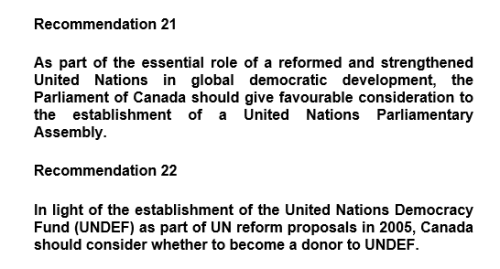


 Yellow Vests of Canada